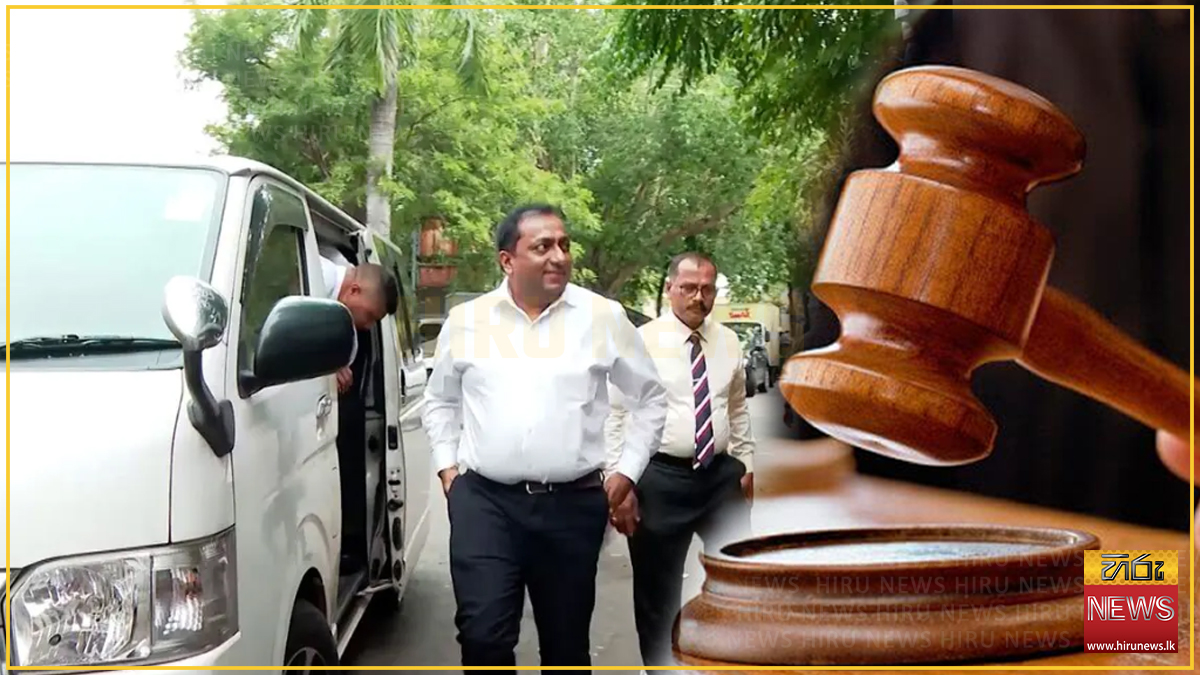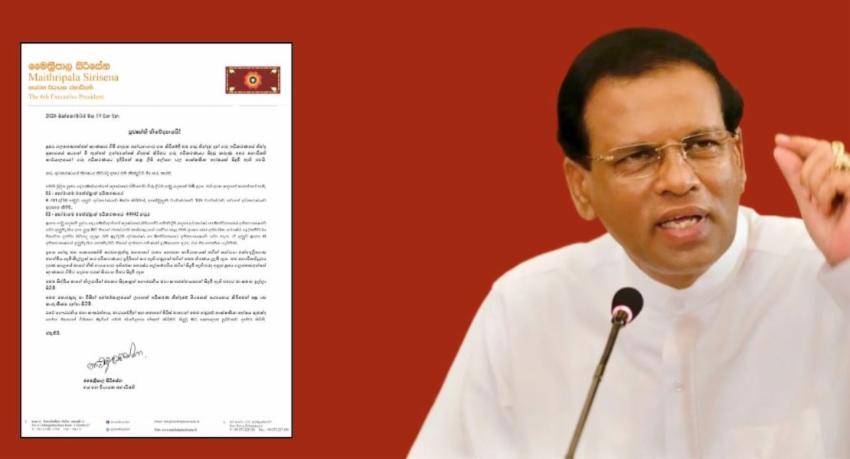
Former President Maithripala Sirisena has apologised to the Maha Sangha over the documentary failure that led the courts to return Ven. Galagoda Aththe Gnanasara Thera to prison, saying the pardon he signed never received the Ministry of Justice and Prisons approval the process required.
Sirisena issued the statement on Sunday, 19 October. The Daily Mirror reported it at 4.26 p.m. and NewsFirst at 11.15 p.m.
What he says went wrong
On Sirisena’s account, the Additional Senior Secretary in charge of the Legal Division at the Presidential Secretariat told him at the time that the two cases against the Thera had to be referred to the Ministry of Justice and Prisons for approval before a pardon could be granted. The files were never forwarded.
“As a result, only my signature was obtained without the approval of the aforementioned ministry. That was a failure on my part,” he said.
He identified the two matters as cases before the Homagama Magistrate’s Court — case No. B 7417/10, relating to obstruction of court proceedings and contempt of court under Article 105 of the Constitution, and a second case numbered 40042.
Sirisena said he respects the court’s ruling and that the decision was correct.
He says two things at once, and each newsroom led with a different one
The statement contains both an acceptance of responsibility and a claim that he was misled, and the two filings divide along that line.
The Daily Mirror leads on the first: the failure to obtain ministry approval “during his tenure was his responsibility,” and his own words, “that was a failure on my part.”
NewsFirst leads on the second. It reports that Sirisena “points out that this amounted to him being misled,” that the error was “allegedly committed by officials,” and that it was because of that official lapse that Gnanasara Thera had to be imprisoned again.
Both are in one statement. A reader seeing only the Daily Mirror gets a former head of state accepting the fault as his own; a reader seeing only NewsFirst gets one describing himself as the victim of his own officials. Neither filing is wrong, and the combination is the more accurate picture: he accepts the signature was his while attributing the missing step to staff.
How he came to issue it
Sirisena said he wrote the clarification after reading a copy of the court ruling available on the internet, prompted by questions from members of the Maha Sangha, journalists and others about the technical error the court had cited.
That is an unusual provenance for a former president’s account of his own executive act — he describes reconstructing what happened in his own Secretariat from a published judgment rather than from his own records.
The case behind the ruling
Sirisena said the proceedings that led to the decision followed a case filed by Sandhya Ekneligoda through a non-governmental organisation associated with Pakiasothy Saravanamuttu.
The pardon itself was invalidated by the Supreme Court in September. Former Chief Justice Sarath Silva has separately argued that the sentence Gnanasara is serving is itself unlawful — a different objection from the one Sirisena addresses, which concerns how the pardon was granted rather than how the sentence was imposed.
Why this lands now
The technical error Sirisena is explaining is the hinge of a campaign that has run for weeks. Monks and lay supporters have marched under the banner “Justice for the Robe” demanding that the Thera’s robe not be removed and that he be pardoned and released. The government has ruled out a fresh pardon; the Mahanayake Theras have asked for his release or a monastic facility; a Fort magistrate has barred dozens of campaigners from the area around the Presidential Secretariat; and one monk was hospitalised during a satyagraha.
Sirisena’s intervention does not change the Thera’s position. It attributes the reason he is back in prison to an administrative omission in the Presidential Secretariat under Sirisena’s own presidency, and apologises for it to the body now campaigning hardest for his release.
Not reported
Neither filing says when the two files should have gone to the ministry, who was responsible for forwarding them, whether that official was ever identified or faced any consequence, or whether Sirisena raised the matter with anyone before the court ruled. Neither reports a response from the Maha Sangha, the government, the Presidential Secretariat or the Thera’s representatives. Neither says whether Sirisena’s account has been put to the officials he describes.
A note on spelling
The Daily Mirror renders the Thera’s name “Galaboda Aththe” in this filing. NewsFirst, and this desk’s previous coverage, use Galagoda Aththe. Same person; an ordinary transliteration variant.
Sources: Daily Mirror, NewsFirst.