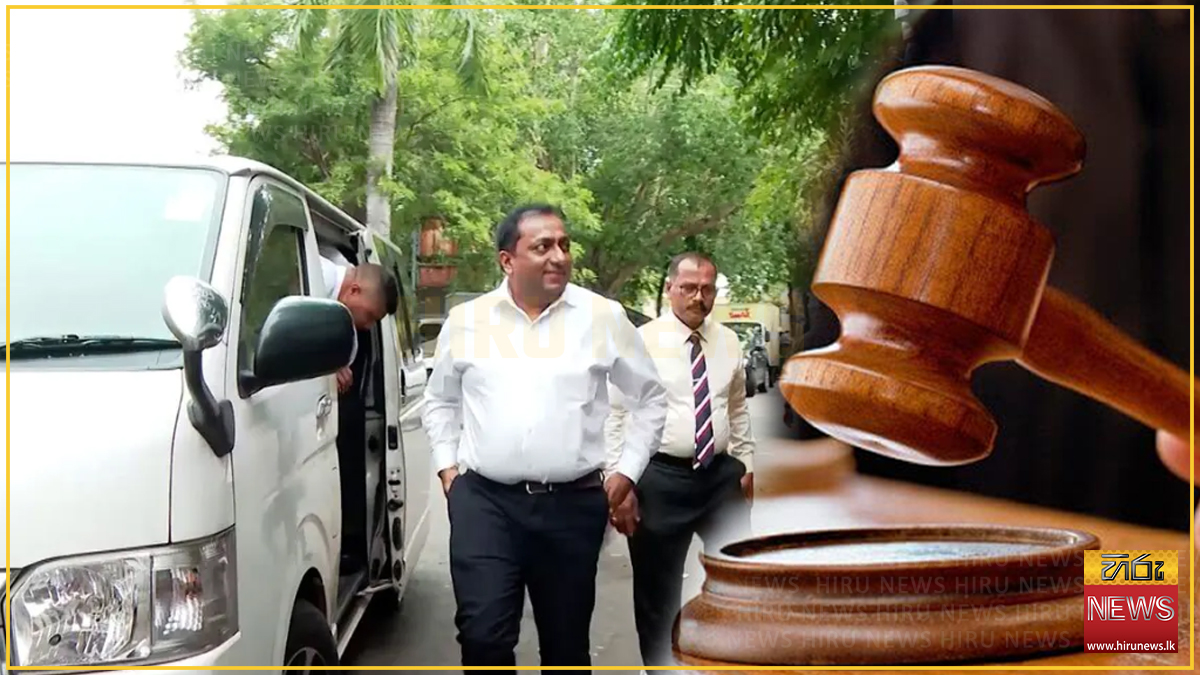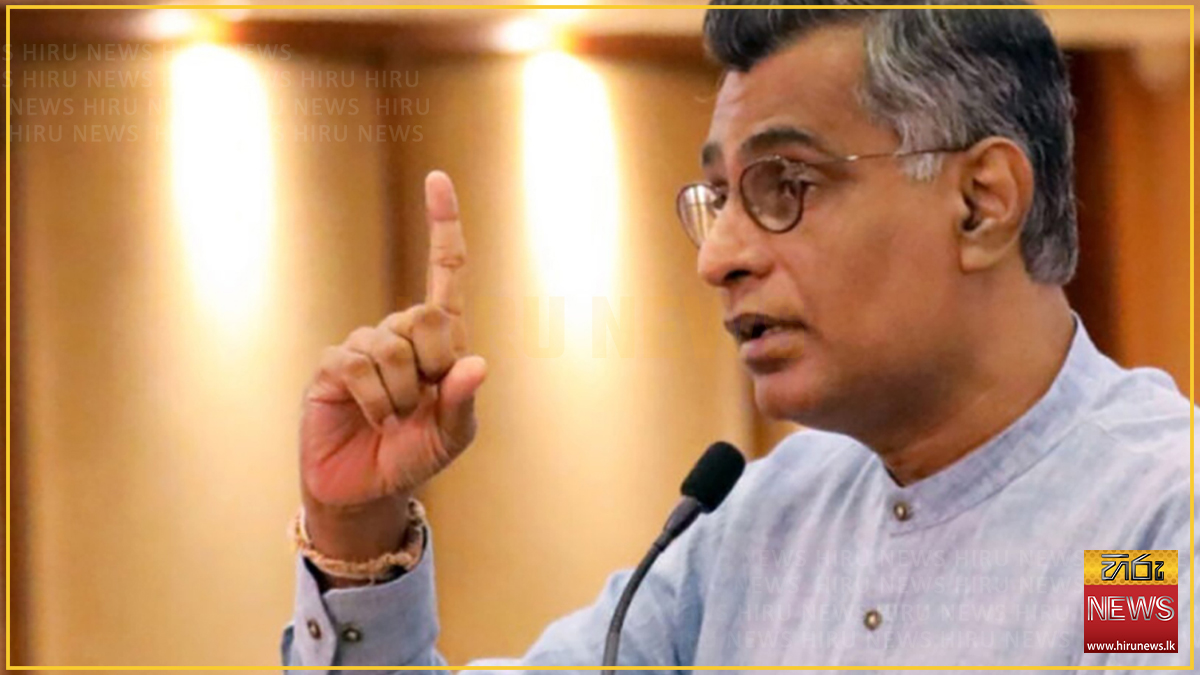
Former minister Patali Champika Ranawaka has claimed that President Anura Kumara Dissanayake granted special pardons releasing 285 people convicted by the courts on Independence Day 2025, and a further 49 convicted persons on 4 February this year.
Ranawaka, who leads the United Republican Front, made the claim at a news conference organised by the Janathawadi Ekabaddha Vipakshaya (People’s United Opposition) on Monday, Hiru News reported on Tuesday afternoon.
This is an opposition allegation. No government figure confirming either number appears in the filing, and no response from the Presidential Secretariat is reported.
The claim is aimed at a specific sentence
Ranawaka’s target is the President’s statement in Badulla on 18 October that the government would act only on Supreme Court decisions and that the public should expect no decisions beyond judicial rulings.
Ranawaka called that statement “merely a joke,” arguing that a head of state who has released hundreds of convicted people by executive act cannot present himself as bound by the courts.
He added that reactions on social media to the Badulla remarks demonstrated what he described as a decline in public support for the President.
What the archive can and cannot confirm
The two figures Ranawaka gives — 285 and 49 — are not independently verifiable from this desk’s records, and neither is the characterisation of them.
What is on record is that the President has used the pardon power, and that the dates fit a conventional pattern. Both dates Ranawaka names are 4 February, Sri Lanka’s Independence Day, which is one of the two occasions — along with Vesak — on which presidential pardons are customarily granted. In May this year the President pardoned 61 prisoners to mark Vesak under Article 34 of the Constitution, with 33 released immediately.
A 4 February 2025 pardon would have been the first of this presidency; Dissanayake took office in September 2024.
The pardon power is already contested ground
The argument Ranawaka is making lands in a debate this government has been conducting with itself for most of the year.
In August, the Justice Ministry said a formal procedure for presidential pardons was heading to Cabinet, following a ten-month study by a committee under retired Supreme Court Justice S. Thurairaja that recommended commuting death sentences to life and cutting life terms to 20 years. The existence of that exercise is an acknowledgement that the power has been exercised without a settled framework.
In September, the Supreme Court invalidated former president Maithripala Sirisena’s 2019 pardon of Gnanasara Thera as arbitrary and invalid in law — a ruling that establishes the pardon as justiciable rather than absolute, and which is the reason a claim about pardon numbers now functions as a claim about respect for the courts.
A campaign demanding a fresh pardon for Gnanasara has been running in Colombo through October, which is the backdrop against which both the President’s Badulla remarks and Ranawaka’s response should be read.
Not reported
Hiru’s filing does not say what offences the 285 or the 49 had been convicted of, whether the releases were full pardons or remissions of sentence, under what constitutional provision they were granted, or where Ranawaka obtained the figures. It does not say whether he produced documentation at the briefing.
It gives no government response, and does not report whether any other speaker at the briefing addressed the same claim.
This article is single-sourced. Ada Derana also filed on the claim, but its site has been unreachable from this desk’s infrastructure for 32 consecutive days under a CloudFront block, so no publish date could be extracted and it is not cited as a source. No other verified newsroom had filed at the time of writing.