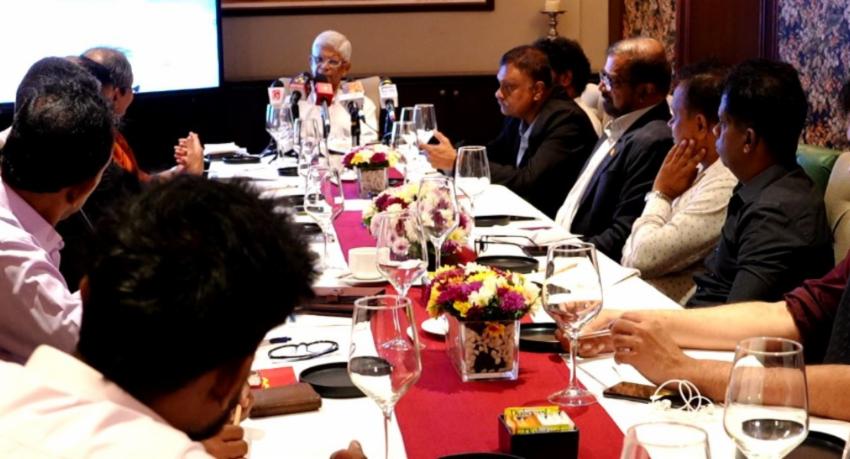
Diplomats, strategic analysts and former military commanders meeting in Colombo divided over whether Sri Lanka should develop Katchatheevu or deliberately leave the island alone, at a Pathfinder Foundation “Ambassador’s Roundtable” on the island’s future and the wider Palk Bay.
Opening the discussion, Pathfinder chairman Bernard Goonetilleke argued that despite more than half a century of Sri Lankan sovereignty, the island has drawn almost no attention beyond an annual religious festival and a naval presence. “We have neglected the place,” he said, noting it lacks even basic accommodation and sanitary facilities.
His substantive complaint was about evidence. “We generally say that a certain tonnage of fish and shrimp is being removed from the bay. We say bottom trawling is destroying the seabed, juvenile fish, fish eggs and coral. But we don’t have the facts. We don’t have the data,” he said, NewsFirst reported. He called for the National Aquatic Resources Research and Development Agency (NARA), universities and independent scholars to study the Sri Lankan side of the bay.
A former navy chief: research would not draw objections
Former Navy Commander Admiral (Prof.) Jayanath Colombage argued that scientific activity would not provoke India. “I think if we want to have a research station, nobody can say anything. But the only thing is we must not antagonise India on this issue.”
He said successive Indian governments have upheld the 1974 and 1976 maritime agreements, and that India’s Supreme Court has declined to reopen the question of ownership — a position this desk reported on 7 October, when the Indian government told its own Supreme Court it had no intention of reopening the accords.
Colombage also rejected the idea that Indian trawlers cross accidentally, saying arrests generally occur well inside Sri Lankan waters rather than near the maritime boundary line. “Katchatheevu is not the issue, but it is made an issue in Tamil Nadu, especially during election time.”
A strategic analyst: leave it barren
Ravinatha Aryasinha, Executive Director of the Regional Centre for Strategic Studies, took the opposite view. Building on the island would invite questions Sri Lanka need not answer. “If you start a centre there, then the question will be who is funding it,” he said, warning that involvement by external actors other than India could be read as contrary to Indian strategic interests.
“Sometimes barren islands must be left as barren islands,” he said, arguing the existing church and naval presence already serve their purposes and that doing more risks reopening a matter largely settled.
The proposal is not new
NewsFirst’s account presents the research station as an idea under discussion. It is an older one than that: the Pathfinder Foundation has advanced the same proposal repeatedly, publishing a “Pathfinder Alert” headlined Kachchativu: Enigma of a Barren Island in the Island on 7 April 2024, under the standfirst “Pathfinder Foundation renews call for establishing a marine research station.” That 2024 alert was itself a renewal of a call the foundation first made years earlier.
Wednesday’s roundtable is therefore the same institution pressing the same proposal for at least the third time — context that changes how the chairman’s “we have neglected the place” reads, and which no single filing on the event supplies.
Not reported and sourcing
No account gives the date the roundtable was held, the full list of participants, whether any government representative attended, or whether the Fisheries Ministry or NARA has responded to the call. Nothing indicates the proposal is before government.
This report rests on a single verified newsroom. Checks of the Daily Mirror, the Island, Daily FT, EconomyNext, Hiru News and the Sunday Times found no other newsroom account of this roundtable; searches returned only older commentary on Katchatheevu, including a Daily Mirror opinion piece of 16 October. Ada Derana remains unreachable from this desk. The 2024 Island item above is cited for the history of the proposal only, and is dated in the text so it is not mistaken for current reporting.

