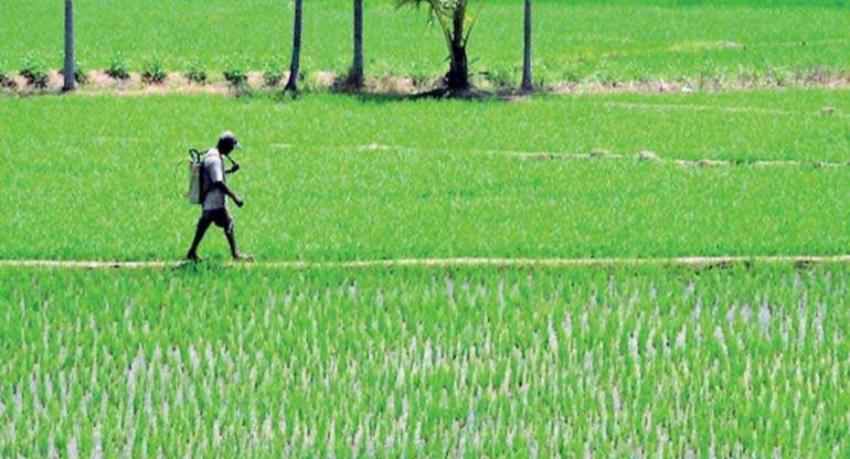
Owners of uncultivated and low-productivity paddy land will be given greater freedom to switch to field crops and permanent crops under the 2027 Budget, which also funds a move away from fragmented smallholder farming.
President Anura Kumara Dissanayake built the agriculture section of Thursday’s Budget speech around a productivity gap, NewsFirst reported: the sector employs nearly a quarter of the workforce, uses almost 40% of the country’s land and absorbs more than Rs 200 billion a year in public investment and subsidies, yet contributes only around 8.4% of the economy.
Changing how land is used
The paddy-land measure allows conversion to other crops following a comprehensive survey, with Rs 1.55 billion allocated to encourage cultivation on underused land.
A collective “Yaya” production model, funded at Rs 400 million, would have farmers act together when buying inputs, managing water, controlling pests and negotiating prices. A further Rs 250 million funds a pilot converting selected Agrarian Service Centres into digital One-Stop Shops across five major farming districts, equipped with technology platforms, machinery pools and real-time information systems.
Subsidies and cooperatives
The fertiliser subsidy remains the largest single line, at Rs 44 billion, continuing payments of Rs 30,000 per hectare for paddy. The Daily Mirror’s sector breakdown lists the same Rs 44 billion figure. From the 2026/27 Maha season the subsidy is to be extended to other crops grown on paddy land.
An additional Rs 300 million, on top of an existing Rs 700 million food security allocation, goes to cooperative societies buying paddy from the Paddy Marketing Board and acquiring rice processing machinery.
A four-year Integrated Plant Nutrient Management System promoting combined chemical and organic fertiliser use receives an initial Rs 47 million in 2027. Cinnamon gets Rs 400 million for value-chain, productivity and quality work — a thread continued from the minor export crops programme reported on 11 November.
Not reported
Neither filing says what safeguards govern the paddy-land conversion, who conducts the survey, or which five districts take the One-Stop Shop pilot.
