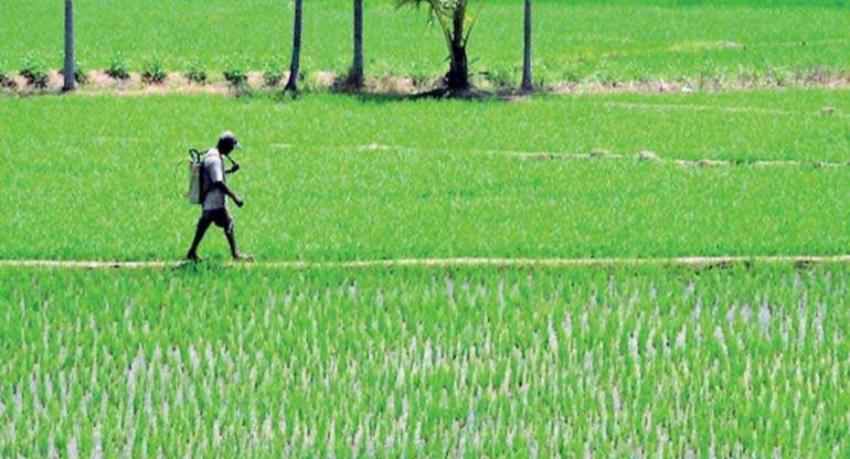
The Agriculture and Agrarian Insurance Board has introduced a crop insurance scheme with enhanced benefits, intended to help farmers absorb the losses of a more volatile climate.
The cover is being offered for paddy, maize, chilli, potato and soya, Hiru News reported at 9.12 a.m. on Thursday.
What it covers and what it costs
The policy pays out for drought, flood, wild elephant damage, insect damage and crop disease — a list that spans both weather shocks and the human–elephant conflict that destroys cultivations across the dry zone each season.
For the five main crops, a farmer pays a premium of Rs 6,400 per acre. Where a crop is damaged, the compensation is Rs 100,000 per acre.
A second tier covers cowpea, green gram, black gram, finger millet (kurakkan), groundnut, sesame and horse gram (kollu). The premium for those crops is Rs 4,200.
Why it matters
Crop insurance in Sri Lanka has historically been thin, and compensation has more often arrived as discretionary post-disaster relief than as a contracted payout. A scheme that attaches a fixed sum to a fixed premium shifts part of the risk off the Treasury and onto an insurance pool — which also means the premium has to be affordable at the farm gate to be taken up at all.
At Rs 6,400 an acre, the premium is roughly 6.4% of the stated Rs 100,000 payout.
Not reported
The filing does not say when the scheme takes effect, whether it applies from the current Maha season, or whether enrolment is voluntary or tied to fertiliser or credit schemes. It gives no cap on the number of acres a single farmer may insure, no claims or assessment procedure, and no indication of whether the premium is subsidised. No official is named and no total programme cost is given.
A search of verified newsrooms found no other outlet carrying this announcement, so the article is single-source. That search returned only older crop-insurance stories from 2017 and 2023. One search summary offered a figure of “Rs 100,000 per hectare” with a five-acre cap — a different unit and a different scheme from the per-acre figure Hiru reports, and it is not used here. Readers should note the per-acre basis is as stated in the fetched filing.