The Advocata Institute warned that the April 2026 domestic LPG price increase remains insufficient and effectively compels lower-income households to subsidise wealthier gas consumers through cross-subsidies.
Litro Gas Lanka raised the retail price of a 12.5kg cylinder by Rs. 775 earlier this month. But Advocata said the Saudi Aramco Asia-Pacific benchmark has risen sharply, adding an estimated Rs. 1,000–1,200 to the landing cost per cylinder. That leaves a shortfall of Rs. 225–425 per cylinder that is being absorbed by other parts of the supply chain.
Advocata said the gap is currently covered by charging industrial users higher prices. Those costs are then passed through to final consumers in goods and services, meaning all households — including the poorest — end up subsidising a benefit that skews to wealthier users.
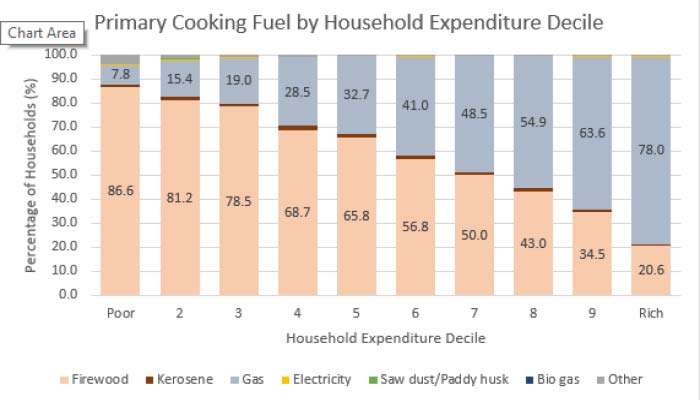
The think tank cited the 2024 Census, which found only 42.4% of households nationally use LPG for cooking, while 55.4% still rely on firewood. The 2019 Household Income and Expenditure Survey showed nearly 80% of households in the highest expenditure tier use LPG, compared with less than 8% in the lowest-income tier.
“While Advocata Institute welcomes the recent LPG price increase by Litro Gas Lanka, it remains inadequate and indirectly forces Sri Lanka’s vulnerable segments to subsidise wealthier LPG consumers,” the institute said.
Advocata called on the government to replace the cross-subsidy model with fully cost-reflective pricing, paired with targeted cash transfers to shield vulnerable households from price shocks. The call echoes broader arguments Advocata has made on electricity tariff reform and other energy pricing issues in Sri Lanka.