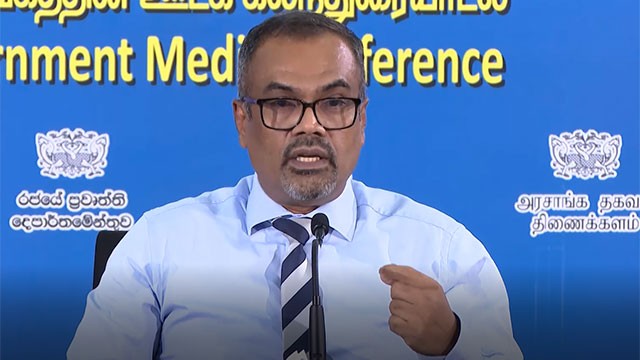
Sri Lanka cannot cut domestic fuel prices immediately even though international crude is sliding, because retailers are still selling stocks purchased at war-driven highs, Deputy Minister of Finance and Planning Dr. Anil Jayantha Fernando said Wednesday.
“We are yet to receive the fuel purchased at the lower prices. What we will be consuming in the coming period are the stocks that were bought at higher prices. Therefore, a reduction in fuel prices cannot be considered immediately,” Fernando told reporters at a media briefing at the Department of Government Information. He said a price revision would be considered once existing inventory is exhausted and the cheaper barrels arrive at terminals.
The Deputy Minister’s comments come after Brent crude slid towards the high seventies on the back of the Iran ceasefire and a Wall Street Journal report on potential sanctions relief, and follow opposition leader Sajith Premadasa’s call earlier in the day for the government to pass the relief through to motorists. Fernando said crude prices that had spiked to around USD 125 had fallen back near USD 80, while imported diesel cargoes that peaked near Rs. 280 had also softened.
He defended the Rs. 100 billion relief package the government has run for three months from the start of the Middle East shock, saying it was right-sized for a short-term external disturbance. “The external factor has to be considered for a short-term decision,” he said. The Deputy Minister added that the Treasury retains an adequate cash buffer and stands ready to provide targeted relief if needed.
Vehicle surcharge curbs dollar drain
Fernando also said the 50% surcharge on Customs Import Duty on new personal vehicles — imposed for three months from May 16 — is working as intended. “Import expenditure on vehicles per day has come down to US$3.79 [million] as of June 12,” he told the briefing, against more than USD 7 million per day before the surcharge and over USD 5 million last year. EconomyNext reported importers opened letters of credit worth US$88 million in a single day during the panic-buying that followed the surcharge announcement.
Vehicles have driven the biggest single foreign-exchange shock to Sri Lanka’s balance of payments since the 2025 lifting of the import ban, with US$613 million spent in the first quarter of 2026 and cumulative outflows reaching US$821 million by April. Finance Ministry officials estimate that US$3.3 billion has flowed out for vehicle imports since the ban was relaxed in January last year. The Central Bank burned a net US$211.3 million in reserves in May to defend the rupee.
The Customs surcharge is set to expire in mid-August, though the Deputy Minister did not indicate whether it will be extended. EconomyNext separately reported that Fernando said the government remains committed to a medium-term growth target of 7%, with first-quarter growth of 5.1% indicating Sri Lanka is on the expected trajectory. The Central Bank, however, projects 2026 growth at the lower end of a 4–5% range after its 100-basis-point policy rate hike in May.