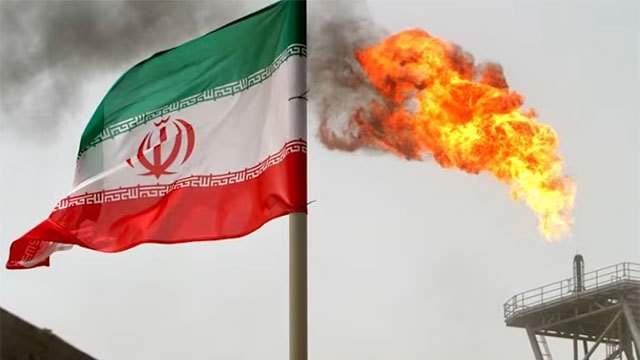
Oil prices dropped below US$80 a barrel on Tuesday for the first time since the Middle East war broke out in February, with the slide accelerating after The Wall Street Journal reported that Washington could lift sanctions on Iranian crude as part of the deal to end the conflict.
International benchmark Brent North Sea crude ended at US$78.96 a barrel, down 5.1% on the day. The main US contract, West Texas Intermediate, fell 5.8% to US$76.05. The drop extends the slide from last Sunday’s tumble to US$83.96, when Trump first announced the US–Iran deal was complete.
Markets had been buoyed earlier in the session by optimism over the promised reopening of the Strait of Hormuz, with Iranian state media reporting that three oil tankers and two cargo ships had already passed through the strait. Tehran had blockaded the chokepoint after the United States and Israel launched strikes against Iran on February 28; Washington then halted shipping to and from Iranian ports as part of the naval blockade that ran for more than three months.
The WSJ report added a new dimension. If the US Treasury issues a sanctions waiver allowing Tehran to immediately sell crude and refined products, the global supply pool would expand at the same time the Hormuz risk premium evaporates — a two-sided easing markets had not fully priced. “Although the deal has not been formally signed, there already appears to be a peace dividend for markets,” Kathleen Brooks, research director at trading group XTB, told Agence France-Presse via Ada Derana.
Oil industry experts and shipping companies have cautioned that the restoration of normal Hormuz operations will take time, and analysts warned market conditions could remain tight for weeks or months even after the conflict formally ends. For Sri Lanka, where the Ceylon Petroleum Corporation said in May it would not cut prices at the June review and where the monthly fuel bill hit US$886 million in April, the move below US$80 brings the cost of imported crude back toward pre-war levels for the first time this cycle and could open space for a downward fuel-price revision at the next CPC review.
Wall Street stocks had a mixed day on the news. The Dow rose to a second consecutive record close while the S&P 500 and Nasdaq retreated, with Briefing.com analyst Patrick O’Hare describing the moves as a rotation rather than a mass exit from equities. European markets closed higher, while Asia ended mixed.
Update — June 17 night: Trump at G7 says deal “will be signed shortly”
Speaking at a news conference in France as the G7 summit concluded on Wednesday, President Donald Trump said the agreement reached with Iran on Sunday would be signed “shortly”, and possibly within a day or two — moving the signing window inside the Friday Geneva ceremony previously announced by Iran’s deputy foreign minister. “So, the deal we reached with Iran on Sunday will be signed shortly, tomorrow, maybe the next day,” Trump said, in remarks carried by Ada Derana citing Anadolu Agency. Technical discussions on the nuclear stockpile, he added, would “start immediately.” Trump again hailed the deal as ending the conflict, reopening the Strait of Hormuz and preventing Iran from ever obtaining a nuclear weapon, saying that without it the United States “could have dropped more bombs for another three weeks, two weeks, four weeks, two years” and the strait would never have reopened. For markets, the pulled-forward signing reinforces the supply-relief narrative driving Tuesday’s slide below US$80.
Sources: Oil drops below US$80 on US-Iran deal — Ada Derana, June 17; Trump says deal with Iran could be signed ‘shortly’ — Ada Derana / Anadolu Agency, June 17.
Update — June 18: Brent extends slide after MoU signing
Oil prices fell further in early Thursday trading after the United States and Iran formally signed the interim memorandum of understanding overnight in Versailles, with markets aggressively pricing in a faster-than-expected return of Iranian barrels. Brent crude futures were down 89 cents, or 1.12 per cent, at US$78.66 a barrel as of 00:05 GMT, and US West Texas Intermediate fell 98 cents, or 1.28 per cent, to US$75.81 a barrel, Reuters reported via Ada Derana. The benchmarks resumed their decline after a brief Wednesday rebound on Trump’s warning that he could resume bombing if Iran’s leaders “don’t behave”.
“The sell-off extended as energy markets continued to aggressively price in a faster-than-expected return of Iranian barrels following the recent US-Iran memorandum of understanding,” IG market analyst Tony Sycamore said. The 14-point MoU triggers a 60-day negotiation window during which Iran will allow toll-free Hormuz passage, with full pre-war capacity to be restored within 30 days. The International Energy Agency cautioned Wednesday that supply could outstrip demand by 5.05 million barrels per day in 2027 if the strait remains open and Middle East oil returns to market, potentially turning this year’s supply crisis into a 2027 glut. The continued slide reinforces the case for a downward CPC fuel-price revision at the next review.
Source: Oil prices decline further as US, Iran sign peace deal — Ada Derana / Reuters, June 18.
Update — June 18: Gold climbs as oil drop dampens inflation expectations
Gold prices rebounded more than 1% on Thursday as the oil slide cooled inflation expectations, demonstrating the inverse commodity-market reaction to the deal. Spot gold rose 1.4% to US$4,316.42 per ounce at 0242 GMT after declining 1.7% on Wednesday, while US gold futures for August delivery fell 1% to US$4,336.70, Reuters reported via Ada Derana. “It’s a bit of short position unwinding given yesterday’s steep fall, and the reason for the short unwinding is also due to the positive news coming out from the Middle East, which has caused oil prices to fall,” said OANDA senior market analyst Kelvin Wong. Spot silver rose 1.8% to US$69.18 per ounce, platinum gained 1.2% to US$1,757.53 and palladium climbed 1.3% to US$1,329.99. The Federal Reserve held the policy rate in its 3.50%-3.75% range on Wednesday but nine of its 19 policymakers now expect a hike this year; traders see an 85% probability of a December rate hike, up from 61% before the Fed decision. For Sri Lanka, the inverse oil-gold reaction confirms the deal’s downward pressure on the global inflation outlook — a structural easing in the import-cost environment that pairs cleanly with the June fuel review window the CPC has signalled.
Source: Gold prices climb over 1% on US-Iran interim deal — Ada Derana / Reuters, June 18.