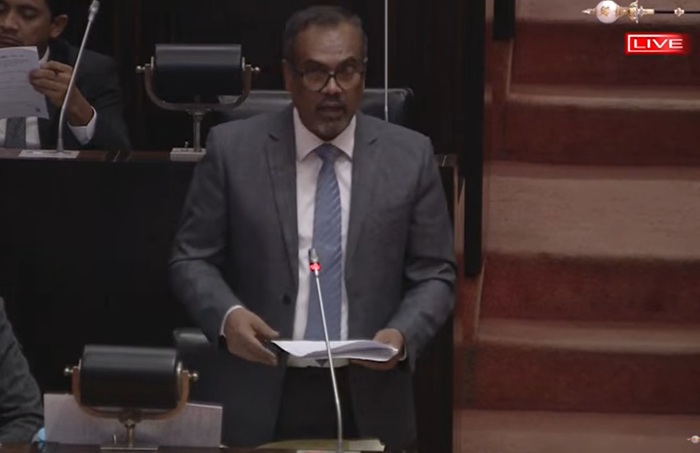
Deputy Finance Minister Dr. Anil Jayantha Fernando told Parliament on Tuesday that the recent depreciation of the Sri Lankan rupee was driven largely by global uncertainty, Middle East tensions, rising oil prices and stronger demand for the US dollar, defending the government’s macroeconomic posture against questions from the Opposition.
Replying to a Standing Order 27(2) intervention from Opposition Leader Sajith Premadasa, Anil Jayantha said the rupee had weakened by around 4.8 percent against the dollar as of May 18 — a slide he argued was “comparatively lower” than that of several countries in the region. The 4.8 percent figure matches the regional comparison Central Bank Governor Nandalal Weerasinghe used on Monday, pitching Sri Lanka’s depreciation alongside India’s 6.4 percent, Nepal’s 6.2 percent and Indonesia’s 5.2 percent.
He attributed the pressure to a strengthening dollar driven by Middle East tensions, investors shifting to safer assets, higher crude oil prices and broader financial-market uncertainty. Hormuz disruptions had also hit Sri Lanka’s tourism sector through key regional aviation hubs, while importers were front-loading foreign-exchange purchases in anticipation of further depreciation and exporters were delaying conversion of earnings. “The current movement should not be viewed as an unusual volatility situation,” he told the House, restating that the Central Bank follows a flexible exchange-rate policy with rates set by market supply and demand.
Premadasa, in his question earlier in the afternoon, demanded that the government detail the causes of the rupee’s continued depreciation, its policy stance and the short, medium and long-term measures being implemented to stabilise the foreign-exchange market. He linked the currency slide to rising cost of living, income inequality and “increasing financial hardship,” asking the government to set out how it intended to ease pressure on households.
The exchange came as the rupee selling rate hit Rs. 340.67 at People’s Bank earlier on Tuesday, a fresh cycle high, with dealer telegraphic-transfer rates also moving wider. The CBSL Governor on Monday had separately pointed to the CPC oil bill of nearly a billion dollars as the dominant external pressure on the balance of payments.
Sources: Newswire — Govt explains Rupee pressure; Newswire — Sajith questions Govt over Rupee fall.