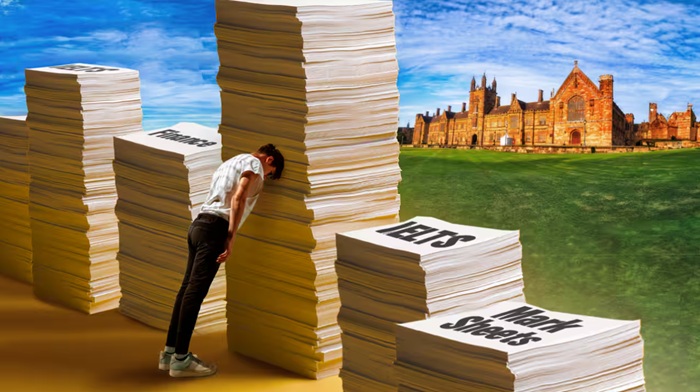
Australia refused 38 per cent of student visa applications from Sri Lanka in February 2026, placing the country among the top five with the highest rejection rates as Canberra tightens its international student intake.
According to figures from Australia’s Department of Home Affairs cited by Newswire, Nepal recorded the highest refusal rate at 65 per cent, followed by Bangladesh at 51 per cent and India at 40 per cent. Bhutan stood at 36 per cent.
The overall refusal rate for higher education visas has surged past 30 per cent — one of the highest levels in nearly two decades — reflecting a broader recalibration of Australian migration policy amid concerns over visa misuse and pressure on housing and infrastructure.
Australia has long been a preferred destination for Sri Lankan students, but education consultants quoted in the Newswire report said applicants now face tougher requirements, including stronger financial proof, clearer academic pathways and credible post-study plans. Further changes to student visa policies are expected in the coming months.
The rejection wave compounds a difficult year for Sri Lankan outbound education, which has seen visa difficulties in the United Kingdom and the United States as host countries push back on perceived migration via the student route. Sri Lankan students typically enrol in Australian universities for postgraduate degrees in business, IT and health sciences.
The rejection wave adds to a broader pattern of Sri Lankan movement overseas: Australia is home to an estimated 184,800 Sri Lankan-born residents according to 2025 ABS data, making the community particularly sensitive to tightening visa rules.
A separate Sunday report by The Island, citing the same Department of Home Affairs data released on May 6, attributed the tighter assessment regime to Ministerial Direction 115, which requires case officers to apply a stricter “genuine student” test and to weigh the compliance risk ratings of education providers. Providers that breach enrolment caps face slower processing or higher rejection rates, the paper said, and Australian universities and vocational institutions are bracing for reduced semester-two enrolments and possible staff cuts in regional campuses.
Sources: Newswire, The Island.