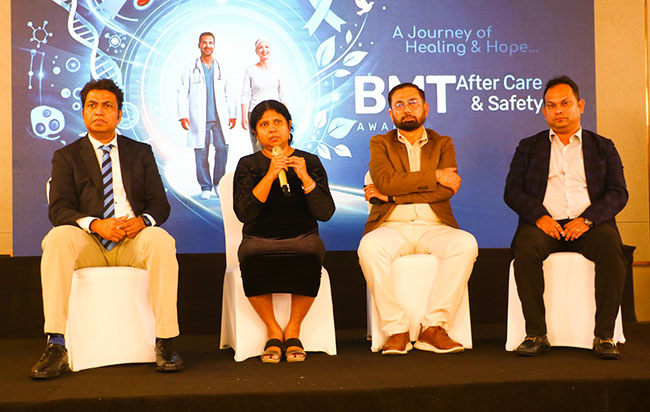
Sri Lanka has only four specialist haemato-oncologists treating thousands of blood cancer patients each year, doctors warned at an awareness programme in Colombo on May 16, calling the cadre dangerously inadequate for the country’s rising clinical burden.
Consultant haemato-oncologist Dr. Buddhika Somawardhana of the Apeksha Hospital in Maharagama said three of the four specialists, including himself, are based at Apeksha, while the fourth serves at the Kandy National Hospital. Between 15,000 and 18,000 cancer cases are reported annually in Sri Lanka, with around 1,500 to 2,000 patients diagnosed with blood cancers and conditions requiring complex treatment such as bone marrow transplantation, he said.
About 5,400 blood cancer cases were recorded among 35,855 new cancer diagnoses in 2022, Somawardhana said, underscoring how heavily the burden falls on the small specialist team. He warned that the shortage was being compounded by the migration of experienced doctors — around seven to eight haemato-oncologists who previously served in Sri Lanka are now working abroad — and by shortages of essential medicines, which often force patients to seek advanced treatment in India.
Consultant haemato-oncologist at the Kandy National Hospital Dr. Nilupuli Goonerathne stressed the importance of continuous post-treatment monitoring. Patients often undergo treatment costing between Rs. 10 million and Rs. 20 million, she said, but outcomes can be undermined if structured follow-up care is neglected. “These patients have significantly weakened immunity and are highly vulnerable to infections and other complications. Follow-up care is not optional, it is essential,” she said.
The awareness programme, organised by A-Mart Holdings, brought together local and international specialists — including consultant haematologist and bone marrow transplant specialist Dr. Mallikarjun Kaalashetty from Bangalore — along with recovered patients to focus on post-treatment safety and long-term recovery, infection prevention, lifestyle management and rehabilitation.
The disclosed gap arrives as Health Minister Dr. Nalinda Jayatissa joins a Commonwealth cancer-control coordination effort in Geneva and as Sri Lanka contends with non-communicable diseases now accounting for more than four in five deaths. It also follows the resumption of PET-CT scan services at government hospitals after an earlier FDG isotope shortage halted scans for cancer patients.