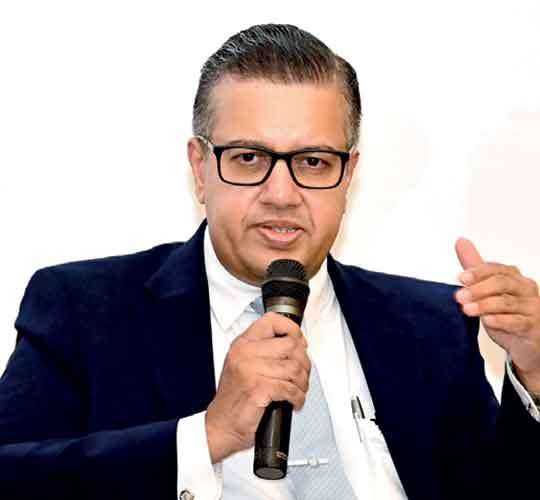
Central Bank of Sri Lanka Deputy Governor Dr. Chandranath Amarasekara has warned that reversing the country’s post-crisis fiscal and pricing reforms risks reproducing the conditions that triggered the 2022 economic collapse, the Daily FT reported.
Speaking at a public lecture organised by the Gamani Corea Foundation and the Sri Lanka Economic Association on “Sri Lanka’s Current Macroeconomic Policy Directions in the Context of Global Volatility,” Dr. Amarasekara urged policymakers and the public to weigh the “counterfactual” — what would have happened had stabilisation measures not been implemented — rather than focusing only on the present cost of reforms.
His remarks came against the backdrop of rising inflation, recent tax-base widening, higher rate slabs and this week’s 18% electricity tariff hike, all of which have drawn opposition pushback. “In September 2022, inflation reached 70%. The impact of that shock is still reflected in the price structure of the economy. The increase in the cost of living during 2022 and 2023 was severe. What is often overlooked today is that prices have since stabilised,” he said.
Dr. Amarasekara framed the current policy choices as constrained by renewed global energy market volatility linked to the Middle East conflict, even as Sri Lanka continues implementing tax and utility pricing reforms under its International Monetary Fund-supported program.
The intervention is the first explicit public defence of stabilisation by a CBSL-affiliated economist since the Rs. 545 billion primary fiscal surplus and the tariff backlash put the reform path back into political contest. The opposition has called for fuel price reductions and tariff rollbacks; Dr. Amarasekara’s lecture argues those would risk the 2022 trajectory.