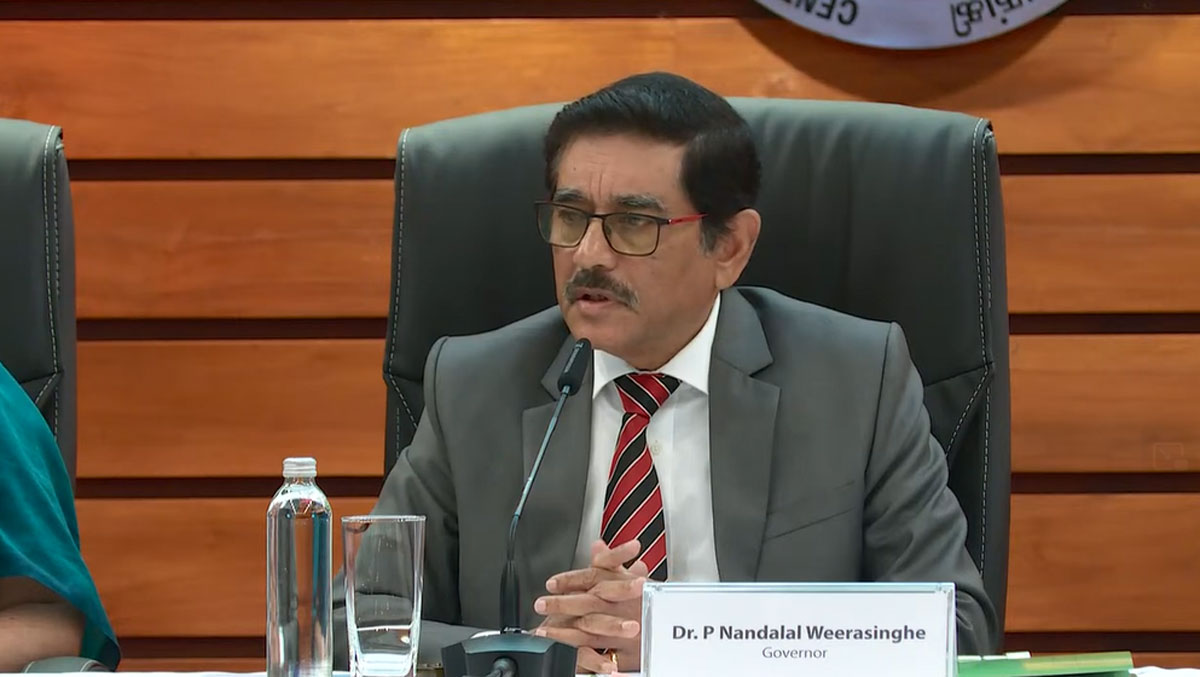
Central Bank Governor Nandalal Weerasinghe has told Parliament’s Committee on Public Finance that Sri Lanka would have to accept lower economic growth if the country chooses to reduce its medium-term inflation target from 5% to 2% under the next agreement with the Finance Ministry.
Under the 2023 Central Bank Act, the CBSL operates within a 3% to 7% inflation band with a 5% medium-term anchor agreed for three years between the Bank and the Treasury. That agreement expires in August, and some government officials have publicly suggested the new target should be lower.
Weerasinghe pushed back on that suggestion at the COPF hearing on Thursday. “If we are to reduce the inflation target to 2% next year onwards, we have to very strictly tighten the monetary policy, raise interest rates unnecessarily to bring down current inflation and 5% to 2%,” he said. “I think that is not growth supporting.”
He argued that the choice was structural, not technical. “For a country like us to balance the growth and inflation, it has to be a balance between both. And we can achieve a low inflation at compromising the growth,” the Governor said. A slightly higher inflation rate, he added, “will slightly support growth.”
Weerasinghe was blunt about the policy contradiction the government would face if it pursued both objectives simultaneously: “If government says we need 5% growth and the government same says we need 2% inflation that is not consistent at the current growth. We can bring 2% down to 2%, but then we have to raise interest rates that will have impact on the growth.”
The Governor said consultations with the Finance Ministry were underway to establish a “desirable rate of growth” before the new agreement is signed.
Headline inflation stood at 5.4% in April and the rupee has weakened roughly 5% so far this year, narrowing the policy room around the August renewal. The statement is consistent with Weerasinghe’s earlier framing that the CBSL is not institutionally mandated to drive growth, and follows his refusal to give forward guidance on the policy rate.