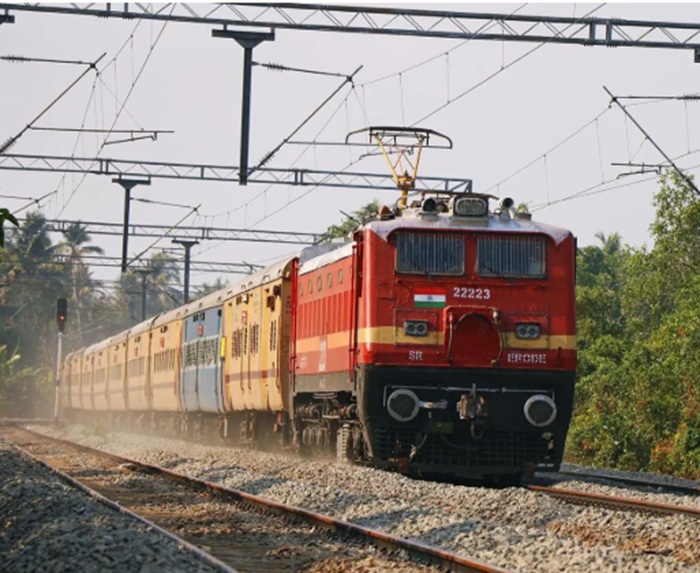
Sri Lanka plans to begin electric train services on three Colombo suburban lines by early 2027 under the Colombo Suburban Railway Project, Deputy Minister of Transport Prasanna Gunasena said on Tuesday.
Discussions on the rollout were held between President Anura Kumara Dissanayake and officials of the Ministry of Transport and Highways, with the meeting focused on the project’s first phase.
Electric services are planned for three commuter corridors:
- Kelani Valley line: Maradana to Makumbura
- Main line: Colombo Fort to Ragama
- Coastal line: Colombo Fort to Panadura
Officials reviewed financial arrangements and implementation challenges. Existing diesel services will continue operating in parallel with the new electric trains, while railway tracks on the targeted corridors will be upgraded from the current broad gauge to standard gauge, the Deputy Minister said.
The Colombo Suburban Railway Project is one of the country’s largest urban transport modernisation programmes, aimed at easing road congestion in Greater Colombo by shifting commuters to higher-frequency rail services. The Kelani Valley extension to Maradana railway station, currently undergoing renovation, is the most heavily used route into the city centre, alongside the Main and Coastal corridors.
The early-2027 timeline marks the first concrete commencement date announced for the project’s electrification phase, with the gauge conversion forming the technical pre-requisite for the new rolling stock.
Update — June 5: Speaking on Friday, Gunasena framed the programme as a two-stage initiative developed on presidential instructions. The first stage will repair damaged track and add slope protection — including retaining walls and improved drainage — before electrified services begin rolling out from 2027 on the Fort–Ragama, Fort–Panadura and Maradana–Makumbura corridors using standard‑gauge track (4 feet 8.5 inches). Later phases will extend modernisation along the Coastal Line, the Main Line via Polgahawela and Rambukkana, and the Kelani Valley Line, with those routes eventually integrated into a wider suburban rail loop modelled on metro-style commuter systems. Gunasena said the initial electrification phase is expected to take three to four years once construction begins, while full implementation of the suburban rail transformation is estimated at 10 to 15 years.