Sri Lanka could face drought conditions in July and August if a developing El Niño weather pattern strengthens, the Department of Meteorology said, with current forecasts pointing to an 82% probability of the phenomenon emerging in the coming months.
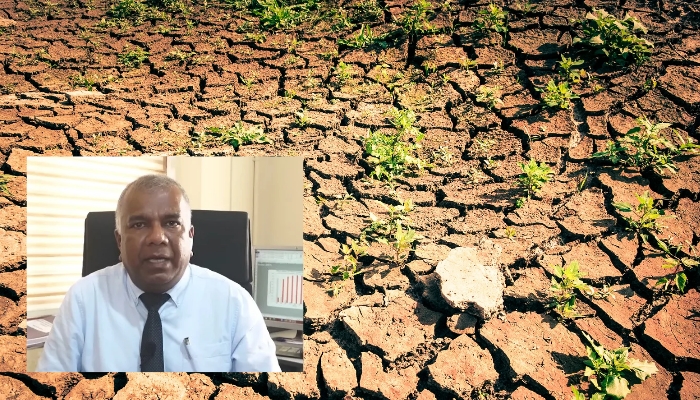
Acting Director General of Meteorology Ajith Wijemanna told reporters that international and domestic models show a high likelihood of an El Niño event, in line with United Nations meteorological agency forecasts of a probable El Niño between June and August.
“If an El Niño condition develops, rainfall is expected to decrease significantly during July and August. We are likely to experience drought conditions during that period. Forecasts currently show more than an 82% probability of an El Niño event occurring during July and August,” Wijemanna said.
He noted El Niño events typically last nine to 12 months, meaning impacts on Sri Lanka could persist into early 2027. “If such an El Niño event occurs, its effects could remain until around February next year,” he added.
Wijemanna also flagged a 40% probability of the event strengthening into a strong El Niño by November, December and January — the height of Sri Lanka’s second inter-monsoon and northeast monsoon season.
He urged the health, energy, irrigation, agriculture and resource management sectors to plan for the potential impacts. “If an El Niño event occurs, the health sector, energy sector, irrigation, agriculture and resource management sectors will all need to manage its effects carefully,” he said.
The warning sharpens an earlier April advisory from the same official, who first flagged the El Niño risk through September as the southwest monsoon began. A weaker monsoon and a drier July–August would compound pressure on hydropower output, with Castlereigh and Maussakelle reservoirs already at low levels feeding the Wimalasurendra, Laxapana, New Laxapana, Canyon and Polpitiya plants — at a time when CPC’s fuel import bill has already peaked at US$522 million in April.
Source: Newswire.