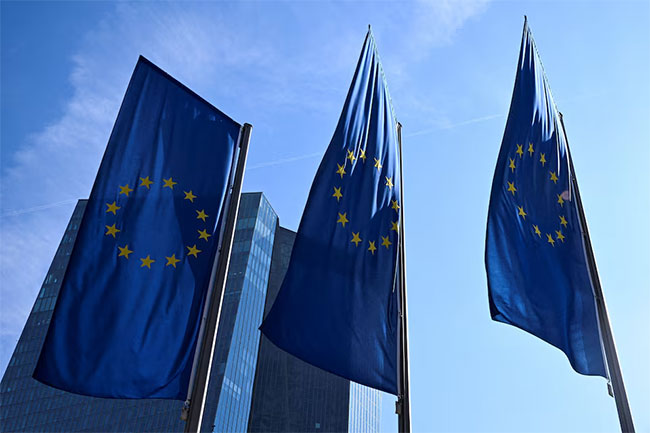
European Union ambassadors have reached a political agreement to expand the bloc’s Iran sanctions regime to cover persons and entities responsible for blocking the Strait of Hormuz, two EU diplomats confirmed on Monday.
The agreement marks the first time Brussels has tied its Iran sanctions framework directly to freedom of navigation in the strait, which has been largely shut for nearly two months. Roughly one-fifth of the world’s oil and liquefied natural gas supplies transit Hormuz, and the closure has upended global energy and commodities markets since US–Israeli strikes on Iran began on February 28.
“There was a political agreement among ambassadors that we indeed would change the criteria in Iran’s sanctions regime so that we could also list persons and entities that are responsible for the obstruction of the freedom of navigation in the Strait of Hormuz,” one of the diplomats said, according to Reuters.
A second diplomatic source said the European External Action Service would need “a few weeks” to prepare the new listings. The EEAS handles individual and entity designations, while the European Commission manages sector-wide restrictions.
The EU previously designated Iran’s Islamic Revolutionary Guard Corps (IRGC) as a terrorist organisation in January 2026 and listed Iranian officials for human rights violations in March. The Hormuz expansion opens a third distinct track focused on maritime navigation.
More than a dozen tankers sailed through Hormuz after Iran briefly declared the strait open on Friday. The ceasefire has since come under strain after the United States seized an Iranian cargo ship while maintaining its own military blockade of Iranian ports. US President Donald Trump has said he will not lift the blockade until a deal is reached.
EU sanctions on Hormuz blockers are expected to compound shipping insurance costs for Sri Lanka’s fuel imports, which have already absorbed sharp premium increases on Gulf routes.