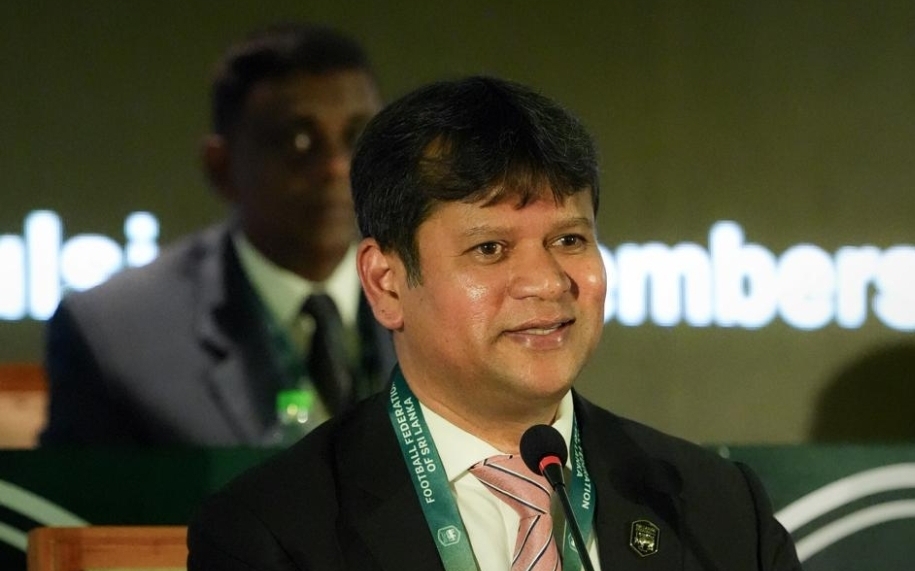
The Football Federation of Sri Lanka has committed to establishing permanent office premises for each of its 61 member leagues across the country, as part of an administrative reform programme aimed at strengthening governance at the grassroots level.
FFSL President Jaswar Umar announced the initiative at the federation’s Annual Ordinary Congress held in Nuwara Eliya on Saturday, attended by representatives of all 61 member leagues, delegates and invited guests, Newswire reported.
The office plan forms part of the FFSL’s new strategic development programme, titled “The Next Chapter,” which the federation said would guide the future direction of the sport. Umar told the Congress that every league should operate from a permanent address able to serve clubs, players, coaches, referees and other stakeholders. Many regional leagues currently operate from temporary locations or private residences, the federation acknowledged, an arrangement that has limited administrative service delivery.
The proposed offices will provide leagues with recognised administrative centres, improve record-keeping and communication, and strengthen financial accountability, the FFSL said. The programme is aligned with what the federation described as a broader vision of decentralising football development and empowering regional institutions in the sport’s growth.
The choice of Nuwara Eliya as the congress venue is unusual for the federation, whose major meetings are typically held in Colombo, and signals a deliberate engagement with up-country member leagues. No timetable for the office rollout was disclosed, and the announcement did not specify how the construction or leasing of premises will be financed.
Sri Lankan football has spent the past several years under heavier external scrutiny than at any point in recent memory, with FIFA’s normalisation period followed by domestic reform pressure on the administration of cricket and other national federations. The FFSL’s grassroots office programme is its first publicly announced infrastructure commitment under the new strategic plan.