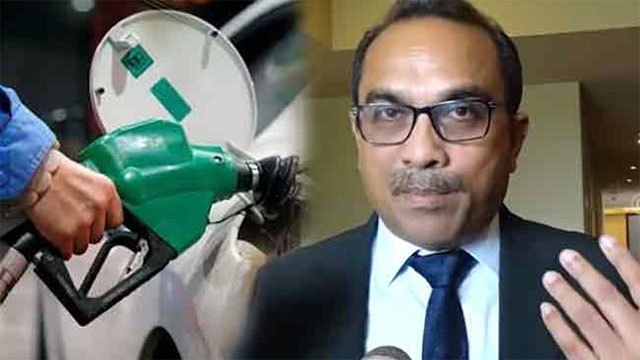
The government is currently subsidising fuel prices by approximately Rs. 100 a litre on diesel and around Rs. 20 a litre on petrol, Minister of Transport, Highways, and Urban Development Bimal Rathnayake said on Saturday, adding that the relief could be passed on to consumers by August or September if global prices remain at current levels.
Rathnayake said the administration “has no intention of generating profits from fuel sales”, framing the subsidy as a deliberate cushion to absorb the recent global price shock rather than a fiscal anomaly to be unwound at the first opportunity.
He cautioned that fuel procurement cannot be carried out in the same way as ordinary spot-market purchases. Stocks are acquired at agreed prices through tender procedures, the minister said, which builds in a structural lag between movements in global crude markets and the prices the Ceylon Petroleum Corporation (CPC) charges at the pump.
The Rs. 100-a-litre diesel subsidy figure is broadly consistent with Advocata’s earlier analysis of CPC’s per-litre cost-recovery gap on diesel and with the Committee on Public Finance’s June 13 discussion that ruled out a downward price revision in June. Today’s comments now place an explicit August–September window on a possible price cut, conditional on sustained global moderation.
The August–September outlook has been thrown into immediate uncertainty by Iran’s announcement on Saturday evening that the Strait of Hormuz has been closed to all vessel traffic over alleged US and Israeli ceasefire violations. Any sustained shutdown would reverse the post-deal oil-price relief that underpinned the government’s subsidy-pass-through trajectory and pull the CPC’s import bill back toward the highs that drove the QR-code fuel quota regime that the corporation is now reviewing.
Update — June 21: Energy Minister Karunatillake confirms timeline
Energy Minister Anura Karunatillake joined Rathnayake in publicly setting an August–September window for any retail fuel price cut, Newswire reported. Karunatillake said recent declines in global oil prices would only affect Sri Lanka once new stocks are procured under the monthly tender process in the coming months, and that the fuel quota (QR) system would remain in place “for the time being”. Both ministers said any reduction in international prices may first be used to offset accumulated subsidy costs before being passed through at the pump.
Sources: Ada Derana; When Can Sri Lanka Reduce Fuel Prices? — Newswire, June 21.
