Around 150 passengers and crew remain stranded aboard the Dutch-flagged expedition cruise ship MV Hondius off Cape Verde, with medics moving on Monday to evacuate two more people showing hantavirus symptoms after a suspected outbreak left three dead and several others ill.
The Netherlands’ National Institute for Public Health and the Environment (RIVM), assisting authorities with the response, confirmed hantavirus in one of the symptomatic patients. A source briefed on the matter said a Dutch woman who died had also tested positive for the virus.
The World Health Organization has identified seven cases on the ship — two laboratory-confirmed and five suspected — and an investigation into whether the deaths were caused by the virus is ongoing. The dead include a Dutch couple and a German national. A British man who left the vessel earlier is being treated in South Africa.
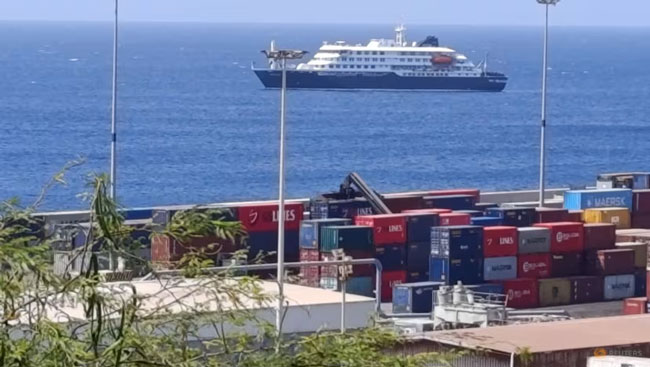
Cape Verde refused permission for the MV Hondius to dock as a precaution, leaving the ship — operated by Oceanwide Expeditions and chartered between Argentina and West Africa — anchored off the coast while evacuations are arranged for the most ill passengers.
The WHO said on Tuesday it now suspects rare human-to-human transmission may have occurred between close contacts on board, though the wider public risk remains low. Maria Van Kerkhove, the WHO’s director of epidemic and pandemic preparedness, told reporters in Geneva: “We do believe that there may be some human to human transmission that’s happening among the really close contacts, the husband and wife, people who have shared cabins.”
Van Kerkhove said the agency’s working assumption is that the strain involved is the Andes virus, which circulates in South America including Argentina, where the Hondius began its voyage. Limited spread among close contacts has been documented in earlier Andes-strain outbreaks. Symptomatic passengers and their carers on the ship are wearing full personal protective equipment, with extra supplies brought on board.
The WHO’s working theory is that the initial case — the deceased Dutch couple — were infected ashore, possibly during bird-watching activity, before transmission occurred on board through intimate contact. The current focus is to evacuate the two sick passengers still on the vessel to the Netherlands before the Hondius continues to the Canary Islands.
The virus is generally contracted through airborne particles from rodent droppings or urine, and there are no specific drugs to treat the resulting respiratory illness — supportive care, including ventilation in severe cases, remains the only option.
In a Wednesday update, the WHO said the case count had risen to eight, three of which were now confirmed by laboratory testing. The strain has been formally typed as Andes hantavirus by the National Institute for Communicable Diseases (NICD) in South Africa and the Geneva University Hospitals (HUG) in Switzerland, with additional support from the Institut Pasteur de Dakar in Senegal and Argentina’s National Health Institutes Administration. Swiss authorities confirmed a case in a passenger who responded to an email from the ship’s operator and presented himself to a hospital in Zurich, where he is receiving care. The WHO said it was working with affected countries on international contact tracing under the International Health Regulations.
Sources: Newswire (citing The Guardian and Associated Press); Ada Derana; Ada Derana; Newswire.