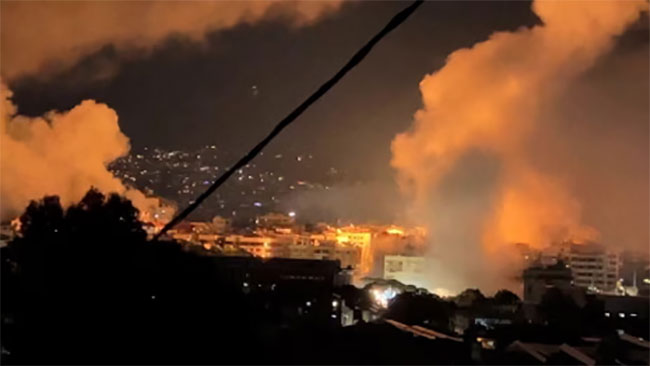
Hezbollah said early Thursday it had fired rockets at northern Israel in response to Israeli ceasefire violations, marking the Iranian-backed militia’s first attack since the Pakistan-brokered US-Iran truce was reached on April 8.
The Lebanese group confirmed the launches in a statement carried by Reuters, describing them as a direct response to Israel’s continued bombardment of Lebanese territory. The strikes came hours after Israeli airstrikes on Lebanon killed more than 254 people in a single day, prompting Lebanon to declare a national day of mourning.
Hezbollah’s intervention is the most serious test yet of the fragile two-week truce, which was designed to halt direct hostilities between Washington and Tehran but which Netanyahu said explicitly did not cover Lebanon. Israel has continued striking Hezbollah positions across the Bekaa Valley, southern Lebanon and Beirut’s southern suburbs throughout the week.
Iranian Foreign Minister Abbas Araghchi had warned on April 8 that Tehran could withdraw from the ceasefire if the assault on Lebanon continues, saying Iran “cannot have both” a truce and a war being fought through its regional ally. The Hezbollah rocket fire now makes that warning concrete.
The escalation is already feeding through to energy markets. Brent crude surged back above $97 a barrel on April 9 as traders reassessed the durability of the ceasefire. For Sri Lanka, a protracted Lebanon confrontation would complicate the government’s planned ramp-down of fuel rationing and weigh on the April 10 no-confidence motion against the Energy Minister.