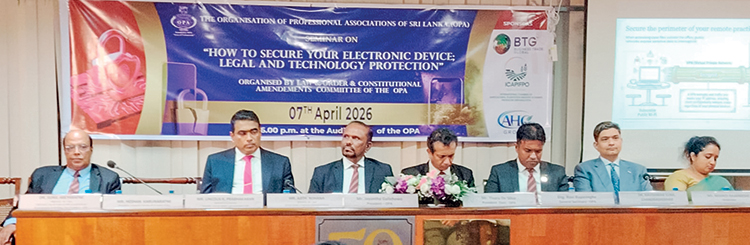
Traditional crimes are rapidly evolving into sophisticated digital offences as criminals increasingly exploit electronic devices, experts warned at a cybersecurity seminar held in Colombo this week.
At the event hosted by the Organisation of Professional Associations, ICT Lawyers Guild Chairman Dr. Sunil Abeyratne cautioned individuals to exercise greater care in protecting mobile devices. He warned against sharing phones with others, noting that “emerging technological threats have made devices central to modern criminal activity.”
Dr. Abeyratne cited Sri Lanka’s Computer Crime Act and Electronic Transactions Act, which address offences including hacking, data manipulation, and financial fraud, but stressed that individual vigilance remains the first line of defence against data theft, location tracking, and phishing.
Indian security expert Dr. Kavishwar Sunil Chandrashekhar warned of the growing threat of cyber espionage and “information warfare” amplified by artificial intelligence and deepfake technologies. He called for enhanced digital sovereignty through zero-trust systems and encrypted communications.
Senior DIG Ajith Rohana and Computer Society of Sri Lanka President Heshan Karunaratne also highlighted escalating cyber threats, noting that while law enforcement has developed specialised cybercrime units and forensic laboratories, public awareness must keep pace.
The seminar’s warnings align with recent data showing 149 million malware attacks recorded against Sri Lanka in 2025, and come amid a broader push for digital literacy through blockchain education and the government’s digital identity rollout.