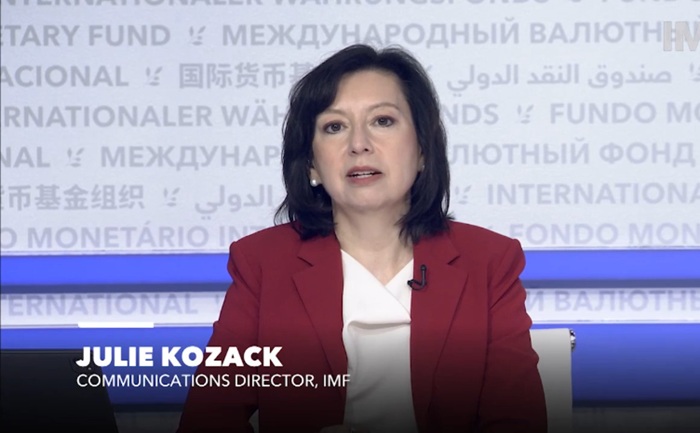
International Monetary Fund Communications Director Julie Kozack declined to directly comment on Sri Lanka’s Rs.100-per-litre diesel subsidy at the IMF’s May 14 press briefing, instead reiterating that the country’s Extended Fund Facility programme requires the restoration of cost-recovery pricing in both electricity and fuel before the next review can advance.
Asked whether the government’s current diesel subsidy is consistent with the IMF’s cost-recovery framework, Kozack did not address the specific measure. She said the programme calls for cost-recovery pricing reforms alongside measures to protect vulnerable populations — framing the two as parallel rather than alternative obligations.
Kozack confirmed that the combined Fifth and Sixth EFF reviews remain subject to Executive Board approval, with a meeting expected in the coming weeks. A staff-level agreement was reached on April 9. Pending prior actions include cost-recovery fuel and electricity pricing, vulnerability protections, and completion of financing assurances. Board approval would release around US$700 million in financing.
Kozack cited two “very large shocks” — Cyclone Ditwah and the Middle East conflict — but said Sri Lanka’s reform programme is producing results, pointing to strong 2025 fiscal performance, debt restructuring progress, 5% economic growth and a return of inflation to positive territory.
The exchange marks the first time the Rs.100 diesel relief — introduced earlier this month to cushion consumers from war-driven fuel costs — has been raised at an IMF press briefing. AKD said this week that the actual CPC diesel cost has reached Rs.720 per litre, well above the regulated retail price. The IMF has previously cautioned against open-ended fuel subsidies during the energy shock, and an earlier May 14 readout flagged the same review timeline.
The Island’s Saturday print edition, reporting under the byline of Thilina Walpola, framed the press briefing around the conditional nature of the US$700 million tranche — describing eligibility as “hinging on” the restoration of cost-recovery pricing for both electricity and fuel.
Sources: Newswire, The Island.