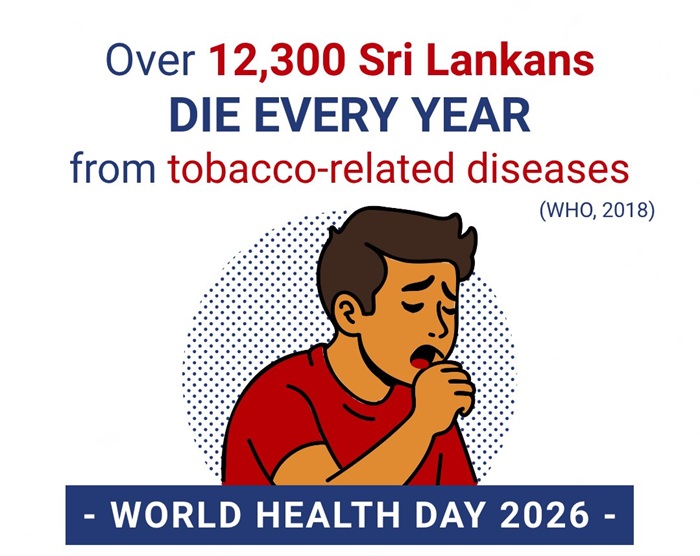
The Institute of Policy Studies of Sri Lanka (IPS) has renewed its call for stronger tobacco taxation, citing research by the World Health Organization showing that more than 12,300 Sri Lankans die every year from diseases linked to tobacco use.
In a message issued around World Health Day 2026, the state-funded think tank said higher tobacco taxes remain the single most cost-effective public health intervention available to reduce consumption and prevent tobacco-related deaths. The WHO has long identified price increases as the most reliable lever to curb smoking, particularly among young and price-sensitive consumers.
“Tobacco isn’t just a health issue; it kills thousands annually. Strong tobacco taxes cut smoking and save lives, paving the way for healthier futures,” IPS Sri Lanka said in a statement on social media.
The institute urged the government to raise tobacco taxes and enforce stronger regulations as part of a broader response to what it described as a continuing public health crisis. The call lands as the Treasury works through a range of fiscal measures under the ongoing IMF programme, where tax reform and revenue protection remain central conditions.
Sri Lanka imposes excise duties on cigarettes through the Ceylon Tobacco Company, the country’s dominant tobacco firm. Successive governments have raised tobacco taxes periodically, though health advocates argue that inflation adjustments alone are insufficient to reduce overall consumption and that stricter enforcement against illicit sales is also needed.
World Health Day is marked annually on April 7 and this year carried the theme “Healthy beginnings, hopeful futures.”