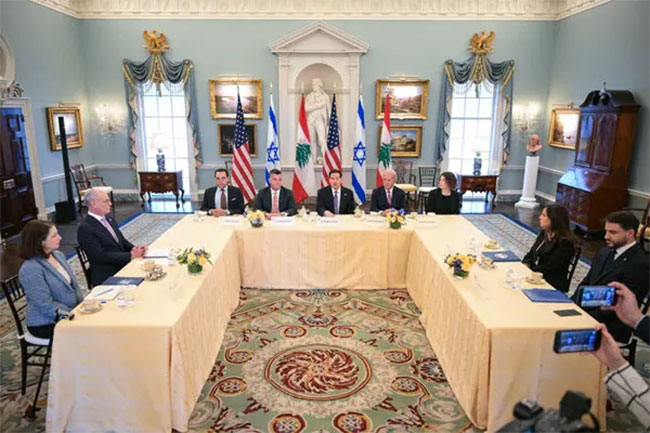
Lebanon and Israel held their first direct diplomatic talks in over three decades on Tuesday in Washington, DC, in a rare encounter aimed at ending fighting between Israel and the Iran-backed Hezbollah group.
Historic meeting
US Secretary of State Marco Rubio mediated the meeting between Lebanese and Israeli representatives, describing it as a “historic opportunity” to end Hezbollah’s influence in Lebanon. A US State Department statement confirmed that both sides agreed to launch direct negotiations and hold further rounds of talks.
The discussions mark the first formal diplomatic engagement between the two countries since the early 1990s. Lebanon and Israel remain technically in a state of war, with no diplomatic relations established since Lebanon’s independence.
Ceasefire context
The talks come against the backdrop of continued Israeli military operations in Lebanon that have killed thousands since the conflict escalated in March. Israel has maintained that its operations target Hezbollah infrastructure, while Lebanon has demanded a complete ceasefire as a precondition for broader negotiations.
Secretary Rubio’s participation was confirmed on April 14, signalling Washington’s intent to elevate the diplomatic track beyond the separate US-Iran nuclear negotiations that have dominated the regional agenda.
Regional implications
The agreement to continue talks represents a potential diplomatic breakthrough amid the wider Middle East conflict that has disrupted global energy markets and affected Sri Lanka’s fuel supply chain. A sustained Lebanon-Israel dialogue could help stabilise the region’s northern front, even as the Iran-US standoff over the Strait of Hormuz continues.