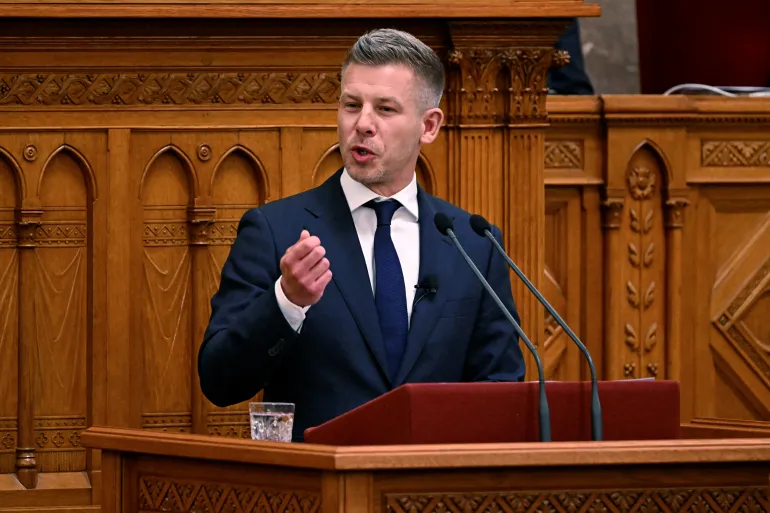
Péter Magyar was sworn in as Hungary’s Prime Minister on Saturday, almost a month after parliamentary elections that ended Viktor Orbán’s 16 years in power.
Magyar, 45, who leads the centre-right Tisza party, was propelled into office on promises of change after years of economic stagnation under Orbán and strained ties with key allies, including the European Union. At the ceremony in Hungary’s neo-Gothic parliament building in Budapest, he invited Hungarians to “step through the gate of regime change.”
His party holds a parliamentary supermajority, having won 141 of the 199 seats in the April 12 election.
The EU flag, removed under Orbán, was displayed inside the parliament chamber for the first time in 12 years. Newly appointed Speaker Ágnes Forsthoffer used her first decision in office to order the flag’s reinstatement, calling it “the first symbolic step on this path” back to Europe.
Magyar aims to strike a deal with the European Union that would unlock around US$ 20 billion in frozen funding. The money has been withheld over concerns about declining rule of law and human rights protections under Orbán. He will also have to revive a stagnating economy and tackle a budget deficit that had reached almost three-quarters of its full-year target by April.
Theofanis Exadaktylos, professor of European politics at the University of Surrey, told Al Jazeera that Magyar will need to prove himself different from Orbán while inheriting a deeply altered state apparatus. “Orbán was in power for such a long time and he has managed to change Hungary substantially from an administrative point of view. To that end, uprooting the previous establishment will be a challenge,” he said.
During Orbán’s tenure, Hungary drifted further from the EU as ties with Moscow deepened. The former prime minister used his veto in the European Council to oppose sanctions on Russia and block support for Ukraine — positions Magyar has signalled he will reverse.