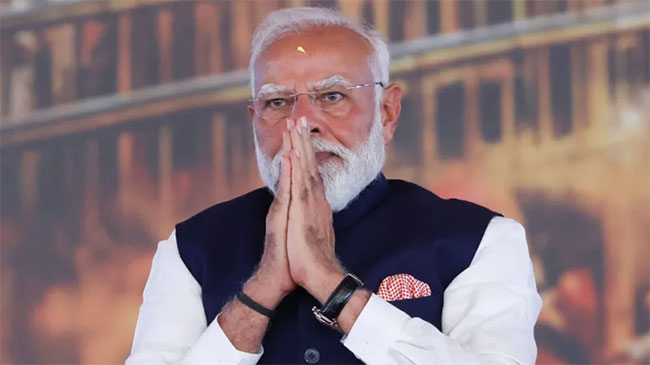
Indian Prime Minister Narendra Modi has called on the public to revive Covid-era austerity practices — working from home, cutting gold purchases and limiting foreign travel — to ease the country’s mounting fuel-import bill as the Iran war enters its third month, Ada Derana reported on Tuesday.
Speaking at a public event in Hyderabad on Sunday, Modi said the steps would reduce fuel consumption and conserve foreign exchange. Analysts described the appeal as the “most drastic” since the Strait of Hormuz first closed, which has now been in partial closure for more than two and a half months.
“Patriotism is not only about the willingness to sacrifice one’s life on the border. In these times, it is about living responsibly and fulfilling our duties to the nation in our daily lives,” Modi said. He urged commuters to use the metro and carpool where possible, and asked farmers to halve their fertiliser use.
India, which imports about 90 per cent of its oil, has seen its crude bill rise by billions of dollars since US and Israeli strikes on Iran. The rupee has hit record lows, raising the cost of imports and adding to inflation pressure. The benchmark Sensex fell more than 1,000 points in early trade on Monday, with analysts attributing part of the drop to Modi’s remarks.
The government has held back on raising pump petrol and diesel prices despite mounting pressure on state-run retailers, but factories making glass, plastics and tiles are now reporting risks to hundreds of thousands of jobs. Dwindling fertiliser supplies have stoked concerns over farm output and food prices.
Opposition Congress leader Rahul Gandhi said Modi was shifting “responsibility onto the people” and called the suggestions “proofs of failure.” Analysts said the appeal signals that directives to curb energy use, and a fuel-price revision, may be imminent.
The International Energy Agency has called the Iran-war disruption the “largest supply disruption in history.” India’s measures join those already taken in China, Australia and the Philippines, all of which have introduced consumer-side cushioning since the war began.
For Sri Lanka, India remains the largest single fuel supply partner, and any Indian household demand reduction could ease Hormuz-driven price pressure on Colombo’s import bill.