India and other major oil importers are likely to negotiate bilateral passage with Iran rather than wait for a full reopening of the Strait of Hormuz, ratings agency Moody’s said in a global geopolitical risk report dated May 12, with maritime traffic now expected to remain well below pre-war levels through 2026.
There is little prospect of a swift, durable settlement between Washington and Tehran or a general reopening of the Strait, Moody’s said. Transit flows will improve gradually but through “bilateral channels rather than a general reopening”, allowing only an incremental rise from near-zero today through a process that will be “slow, opaque and subject to interruption”.
“We expect oil importers — particularly China, India, Japan and Korea — to negotiate passage bilaterally with Iran, potentially through coordinated transit corridors such as those reportedly emerging near Larak Island and through Omani territorial waters,” the agency said. A return to pre-conflict traffic volumes in 2026 is “unlikely”.
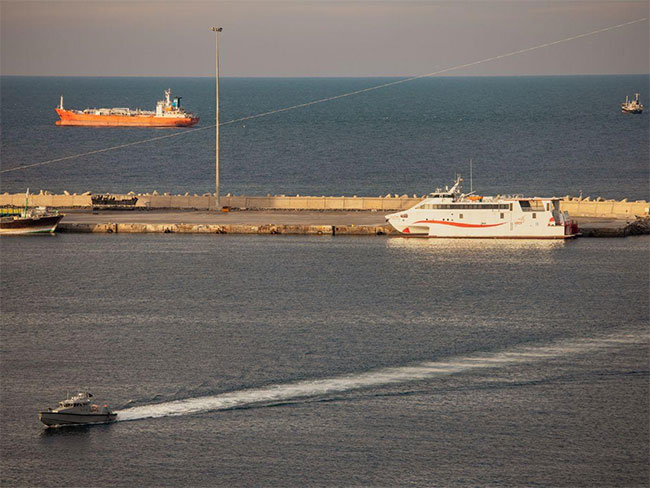
Maritime traffic through the chokepoint has fallen by more than 90% from pre-conflict levels, with shipping curbed by risk aversion, high insurance costs and the continued presence of sea mines. Moody’s expects Brent crude in a $90–110 a barrel range for much of 2026, with significant volatility and occasional moves outside the band.
At sustained Brent of $90–110, the agency estimates real GDP growth reductions of 0.2 to 0.8 percentage points across several major economies. India is among the most exposed because roughly 46% of its crude oil imports come from the Middle East, alongside currency depreciation pressure and a sensitive external account. Moody’s in its May Global Macro outlook cut India’s 2026 GDP growth forecast by 0.8 ppt to 6% and raised its India inflation projection by one percentage point to 4.5%.
The disruption “has become a structural supply constraint to global energy flows rather than a temporary supply shock”, Moody’s said, expecting it to continue through autumn. Persistently higher energy prices will feed headline and core inflation, complicate monetary policy and tighten financing conditions for exposed borrowers, the agency added. The report was carried by PTI and reported in Sri Lanka by Ada Derana.
The framing matters directly for Sri Lanka. The island’s fuel and gas import chain runs largely through Indian refineries and intermediaries; an Indian supply squeeze passes through quickly to Colombo via the pending Russia oil deal, Lanka IOC retail pricing, and CPC procurement costs that have already pushed Brent above $109. The bilateral-corridor framing is a qualitative shift from earlier coverage of a possible full reopening — the new normal, on Moody’s reading, is opaque private deals rather than open transit through 2026.