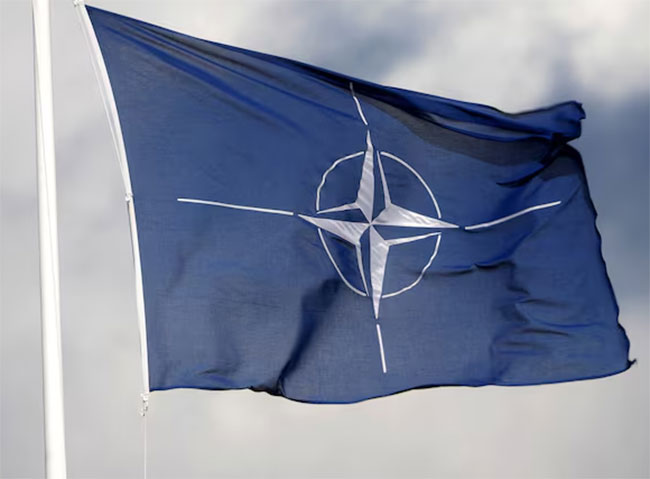
NATO’s 32 member states have sharply criticised the nuclear postures of Russia and China, urging both to cooperate with the United States on “strategic stability” ahead of a United Nations Non-Proliferation Treaty (NPT) review conference opening next week in New York.
In a joint statement from NATO’s North Atlantic Council, the alliance accused Moscow of violating “crucial arms control commitments” and employing “irresponsibly threatening nuclear rhetoric.” Beijing was accused of rapidly expanding and diversifying its arsenal “without transparency.”
The statement arrives against a backdrop of the war in Ukraine and the US–Israeli campaign against Iran, both of which have injected fresh uncertainty into global arms-control diplomacy. NATO said it remained committed to “the full implementation” of the NPT, in force since 1970.
In a Reuters interview, NATO Assistant Secretary General Boris Ruge cited Russia’s use of its nuclear-capable Oreshnik intermediate-range ballistic missile — deployed twice in Ukraine — as a prime example of “nuclear signalling” from Moscow. “Today, we face a Russia that has dropped out of all the important arms control agreements,” he said, pointing to the expiry of the New START treaty earlier this year.
Russia has insisted it will remain a “responsible” nuclear power post-New START, while the Kremlin has called France’s plans to expand its arsenal “highly destabilising.” Ruge defended France’s move as “measured, reasonable, and transparent.”
China, for its part, dismissed the transparency critique. A foreign ministry spokesperson in Beijing said China “always keeps its nuclear strength at the minimum level required by national security” and would “never participate in a nuclear arms race.”
According to the Federation of American Scientists, Russia holds about 4,400 nuclear warheads, the US 3,700, China 620, France 290 and the UK 225. India, Pakistan and North Korea also possess warheads; Israel is widely assumed to but neither confirms nor denies.
The review conference comes as US–Iran nuclear talks test their own fragile deadline this week in Islamabad.