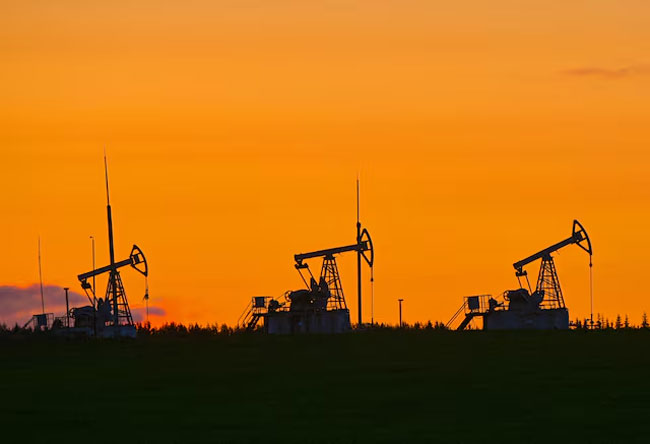
Brent crude rose above $120 a barrel on Wednesday and briefly hit $122 — its highest level since 2022 — after reports US President Donald Trump has instructed aides to prepare for an “extended” naval blockade of Iran’s ports.
The Wall Street Journal said Trump opted to keep squeezing Iran’s economy and oil exports rather than resume bombing or walk away from the conflict, as those alternatives carried more risk. Iran has said it will continue disrupting traffic through the Strait of Hormuz in response.
Energy executives including Chevron CEO Mike Wirth met Trump at the White House on Tuesday to discuss limiting the conflict’s fallout on American consumers. A White House official told Al Jazeera the president and the executives discussed “steps we could take to continue the current blockade for months if needed and minimize impact on American consumers” — the first explicit administration confirmation that the siege has multi-month planning.
Oil traders read the meeting as a signal the effective closure of Hormuz — which normally carries about a fifth of the world’s oil and liquefied natural gas — will continue for some time. Brent settled at $118.03 a barrel Wednesday and rose to $119.94 by early Thursday, while US West Texas Intermediate settled at $106.88 Wednesday and traded at $107.51 Thursday, Reuters reported. The Pentagon separately disclosed for the first time that the war on Iran has cost the US military $25bn so far.
Trump on Wednesday urged Iran to “get smart soon” and sign a deal, posting on Truth Social that the country “couldn’t get its act together.”
The price has fluctuated sharply since the war began on 28 February, falling to about $90 a barrel on 17 April after the Israel–Lebanon ceasefire was announced, then climbing steadily over the past 12 days as the US sustained its blockade. The pre-conflict baseline was about $70 a barrel.
The World Bank on Tuesday forecast energy prices would jump 24% in 2026 — to their highest since Russia’s full-scale invasion of Ukraine — if the most acute disruptions persist.
Iran’s economy is under deepening strain. The Statistical Center of Iran reported annual inflation at 53.7%, the rial is at a record low, and the government said last week some two million Iranians have lost jobs directly or indirectly because of the war.
The new price level adds further pressure on Sri Lanka’s Ceylon Petroleum Corporation, which has been paying war-driven premiums on every shipment, and on the revised PUCSL tariff filings due for a final decision on 9 May.