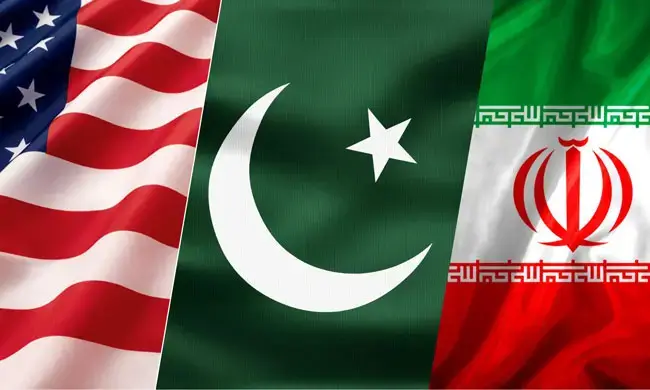
The United States and Iran have reached a deal to end their war, US President Donald Trump and Pakistani Prime Minister Shehbaz Sharif declared on Sunday, with the formal signing now set for Friday, June 19, in Switzerland.
“The Deal with the Islamic Republic of Iran is now complete,” Trump wrote on his Truth Social platform around 5:30pm Washington time on Sunday — about 1:30am Sri Lanka time on Monday — shortly after Sharif posted on X that the framework calls for “the immediate and permanent termination of military operations on all fronts, including in Lebanon”. Pakistan has served as the lead mediator alongside Qatar throughout the conflict, which began when US and Israeli forces first attacked Iran on February 28.
The Strait of Hormuz — through which roughly 20% of the world’s seaborne oil and liquefied natural gas normally transits, and which Iran has effectively blockaded for months — will be open “toll free”, Trump said, ending Tehran’s insistence on transit fees. The US naval blockade of Iranian ports will also be lifted. “Ships of the World, start your engines. Let the oil flow!” Trump wrote. The toll-free framing resolves a central tension in last week’s draft, when Iran’s Foreign Ministry had argued it would have to “charge for services in the strait”.
Under the terms previewed by Reuters, the United States will release US$25 billion of frozen Iranian assets while Iran agrees not to produce or acquire nuclear weapons. Tehran will maintain the nuclear status quo — no further uranium enrichment, no expansion of nuclear facilities — until a final agreement is reached during a 60-day window of additional talks. A US official said the framework would ultimately lead to the dismantling of Iran’s nuclear programme, with Iran’s stockpile of highly enriched uranium destroyed and removed; a senior Iranian official said the deal would allow Iran to dilute the material inside the country. Qatari negotiators flew to Tehran on Sunday morning to help finalise the text. The completion announcement supersedes last week’s framework reporting, when Pakistan said the text was reached and electronic signing was expected within 24 hours — the signing has now been moved to a formal ceremony in Switzerland.
The agreement was sealed despite an Israeli strike on the southern suburbs of Beirut on Sunday that drew criticism from both Tehran and Washington. “This morning’s attack on Beirut should not have happened, particularly on a special day when we are so close to a Peace Deal with Iran,” Trump wrote. Iranian negotiator Mohammad Baqer Qalibaf said on X that Israel’s attack showed the US lacked “the will and ability to fulfill your commitments”, and Iran’s foreign ministry held the United States responsible for the strike, warning of a “strong response” with its top joint military command saying the “finger (is) on the trigger”. Prime Minister Benjamin Netanyahu has differed with Trump over US demands that Israel curb its action in Lebanon; Israel said it is not a party to the deal and will retain freedom of operation there. Israel’s N12 reported Trump updated Netanyahu on the deal’s progress on Sunday.
For Sri Lanka, the toll-free Hormuz reopening removes the single largest external pressure on the country’s fuel import bill. Ceylon Petroleum Corporation’s monthly crude bill spiked to US$886 million in April — up 149.9% year-on-year as Hormuz risk-premium charter and insurance costs piled on, and accounted for over a third of April’s $2.4 billion import basket. With markets immediately pricing in the announcement, Brent crude futures dropped sharply on Sunday evening, with Brent falling around 4% to $83.96, on signs that supply disruption fears have abated. Thousands of people have been killed, mostly in Iran and Lebanon, since the war began in February. Hardliners at pro-government rallies across Iran on Saturday night chanted “Death to the compromiser” in apparent reference to Foreign Minister Abbas Araghchi, signalling continued internal opposition to the framework even as the official signing approaches.
Update — June 15: Iran confirms MoU finalised, Geneva signing Friday
Iran’s Deputy Foreign Minister Kazem Gharibabadi said early Monday that the memorandum of understanding between Iran and the United States has been finalised and would be officially signed on Friday, Anadolu Ajansi reported. The formal signing ceremony will take place in Geneva, Switzerland, according to remarks carried by Iran’s semi-official Mehr News Agency, and the lifting of the US naval blockade against Iran will begin on Sunday night US time. Gharibabadi described the memorandum as the result not only of diplomacy but also of Iran’s “military achievements” during the conflict, claiming Iran had “included all of its key positions in the draft memorandum”. The full text will be published after the official signing, and Iranian officials will explain the agreement through public media before the ceremony.
Update — June 15: EU Chief calls for immediate Hormuz reopening
European Commission President Ursula von der Leyen welcomed the agreement and said it “should allow for the immediate reopening of the Strait of Hormuz”, Ada Derana reported, citing CNN. “Freedom of navigation must be restored toll-free. This is essential for regional stability and the global economy,” she said in a statement on Monday. She also called for diversification away from “the bottleneck of Hormuz” and said the issue would be discussed at the G7 meeting that begins Monday in France. EU foreign affairs chief Kaja Kallas separately welcomed the deal and said EU foreign ministers would discuss how the bloc could be involved in the next phase. “I have spoken to my Iranian and Gulf counterparts in recent days, and today, EU Foreign Ministers will discuss how the EU can be closely involved in the next phase,” Kallas wrote on X.
Update — June 15 evening: Trump, Vance and Qalibaf sign MoU; signing brought forward
A senior US official said the agreement between the United States and Iran has been signed by President Donald Trump, Vice President JD Vance and Iranian parliament speaker Mohammad Bagher Qalibaf, in a Reuters dispatch carried by Ada Derana late Monday. The official said the details of the agreement would be released within the next 24 to 48 hours and that technical discussions would be launched later in the week. The deal provides for an immediate opening of the Strait of Hormuz and the lifting of the US blockade on Iran, the official said. The signing brings the agreement forward from the Friday Geneva ceremony previously announced by Iran’s deputy foreign minister.
Update — June 15: Iran’s foreign ministry signals “deep mistrust” remains
Iran’s foreign ministry said separately on Monday that Tehran still holds “deep mistrust” of the United States despite the framework, foreign ministry spokesman Esmaeil Baqaei told a press briefing carried by Ada Derana. “Iran’s deep mistrust of the US stems from a long history of wrongdoing by American leaders,” Baqaei said, calling the framework “merely a step towards reducing tensions”. He said Washington had committed to releasing Iran’s frozen funds abroad and compensating Tehran for damages during the war, calling both points “essential”. The US has said any sanctions relief would be phased as Iran limits its nuclear programme, and not delivered upfront in exchange for reopening the strait.
Key details on the nuclear track and Hormuz transit remain unresolved. Vice President Vance told CNBC on Monday that the United States expects Iran will not charge tolls on shipping through the strait but that the issue would be handled in the technical talks. “Our expectation is that the strait is going to be opened in a toll-free way for the long term, and that’s the sort of thing that we’re going to figure out in these technical negotiations,” Vance said. Baqaei in turn reaffirmed Iran’s framing that any charges levied would be service fees rather than tolls. “We have always maintained that we do not seek to collect transit tolls, but fees for navigation services, environmental protection, ship insurance and other necessary services will be charged,” he said. He added that Tehran “neither trusts Israel nor the US”, and that Washington must ensure Israel also commits to halting the war in Lebanon.
Update — June 15 night: Trump says Hormuz “already partially opened” at G7
Speaking alongside French President Emmanuel Macron at the G7 summit in Evian-les-Bains on Monday evening, Trump said the Strait of Hormuz was “already partially opened” and would fully reopen on Friday when the memorandum is formally signed, in remarks carried by Ada Derana citing CNN. “They’re doing a little hunting for a couple of mines that they’ve already found, but … ships are starting to go out now,” Trump said. “On Friday, it’ll be completely open.” Trump publicly complained about European leaders’ unwillingness to join the US-Israeli war against Iran but said the strait would reopen without much French assistance. “I don’t think we’re going to need much help, because we have an agreement where it’s going to be open, and it’s toll-free. We had a little argument on that; it’s toll-free,” he said, while suggesting “it’s not a bad idea to have a ship or two up here from a few countries.” For Sri Lanka the early partial reopening — even before Friday’s ceremonial signing — could begin easing Hormuz risk-premium charter and insurance costs on CPC crude shipments through the strait.
Update — June 16: Trump at G7 with Macron says “the deal is all signed”
Speaking alongside French President Emmanuel Macron at the G7 summit on Monday, Trump declared the preliminary deal already signed and said details would be published “pretty soon”, in remarks carried by Ada Derana citing BBC. “I am very happy to say it’s signed, the deal is all signed,” he said. Senior US officials briefed that the Strait of Hormuz would reopen on Friday — the same day the deal is formally inked in Geneva — and technical talks on Iran’s nuclear programme are expected to begin this week. Any sanctions relief or release of frozen assets will depend on Iran meeting its commitments under the deal.
Vice-President JD Vance told CNN’s Jake Tapper the memorandum of understanding between the US and Iran was “about a page and a half” and a deliberately general framework document. “On a number of issues, we are going to have to figure this stuff out during the technical negotiation phase, but what the MOU does is set up a framework whereby the Iranians get the benefits of the bargain by meeting their obligations under the bargain,” Vance said. The agreement was signed electronically by Trump, Vance and Iranian Parliament Speaker Mohammad Bagher Ghalibaf, US officials confirmed, and extends the ceasefire by another 60 days during which the sides will negotiate the final text. A joint congratulatory statement from the UK, France, Germany and Italy said Iran “must never acquire a nuclear weapon” and that the bloc was “prepared to lift relevant sanctions in response to clear, verifiable steps by Iran on its nuclear programme”. UK Prime Minister Keir Starmer called the announcement “a hugely important step forward in ending the war, ensuring regional stability and re-opening the Strait of Hormuz”.
Update — June 17: Three Iranian tankers exit US blockade for first time in months
At least three Iranian tankers carrying nearly five million barrels of crude oil have exited the US Navy blockade in the Strait of Hormuz in the first such outbound shipment in two months, Ada Derana reported citing CNBC. Two supertankers named Diona and Hero 2 — both owned by the National Iranian Tanker Company and under US sanctions — made it through the blockade perimeter carrying a combined 3.8 million barrels of Iranian crude, according to shipping data provided by Kpler. A third Iran-linked tanker carrying one million barrels exited the blockade line on Wednesday.
“Their apparent departure from the blockade suggests that other Iranian-trading tankers are also preparing to resume trading,” said Michelle Wiese Bockmann, senior maritime intelligence analyst at Windward.
Industry response is mixed. “The maritime sector is treating the news with something closer to wary disbelief than celebration,” Lloyd’s List Intelligence said. Insurers are holding firm on high war-risk premiums, demanding “solid evidence” the waterway will remain safe. Some very large crude carrier (VLCC) owners are looking to gain a “first-mover advantage” — dozens of VLCCs have sailed from the South China Sea and across the Indian Ocean toward UAE ports, where at least 30 ships were already at anchor, according to Windward. The US Navy has reminded the industry that “nothing has changed and will not until the agreement is signed”, said Tim Wilkins, managing director of independent tanker association Intertanko. Kpler estimated 118 laden tankers could exit the region within 15 days after the deal is signed, though the surge would likely be a one-time event rather than a durable recovery. For Sri Lanka, the early outbound movements are the first physical evidence that CPC charter and insurance costs through the strait could begin to fall ahead of Friday’s Geneva signing.
Update — June 18: US releases full 14-point Islamabad MoU text
A senior US administration official on Wednesday read out the full text of the 14-point “Islamabad Memorandum of Understanding between the United States of America and the Islamic Republic of Iran” after public outcry that the document had not been made public, Newswire reported citing CNN. The memorandum will be formally signed Friday, triggering a 60-day window to negotiate the final terms. “This is fundamentally an agreement that allows us to open the Strait of Hormuz immediately, commit the Iranians to destroying the nuclear dust, and then gives us a dial where if the Iranians dial up their good behavior, we respond by dialing up the kind of economic and sanctions relief that can make them a more prosperous country,” the senior US official said.
The text confirms several previously briefed terms and adds substantial new detail. Under paragraph 4, the United States will begin removing its naval blockade immediately on signing and “fully end” it within 30 days, with vessel traffic restored in proportion to pre-war volumes. Under paragraph 5, Iran will provide safe passage of commercial vessels at no charge for 60 days only, with demining instated within 30 days, while Tehran consults with Oman on the future administration of services in the Strait of Hormuz “in line with the applicable international law and the sovereign rights of coastal states”. Paragraph 6 commits the United States and regional partners to a “definitive, mutually agreed plan with at least USD 300 billion for the reconstruction and economic development of the Islamic Republic of Iran”. Paragraph 7 sets a schedule to terminate “all types of sanctions” — including UN Security Council resolutions, IAEA Board of Governors resolutions and unilateral US primary and secondary sanctions. Paragraph 10 directs the US Treasury to “issue waivers for the export of Iranian crude oil, petroleum products and derivatives, and all associated services, including banking transactions, insurances, transportation” immediately upon signing and until sanctions are terminated.
On the nuclear track, paragraph 8 confirms Iran will not procure or develop nuclear weapons and that the disposition of stockpiled enriched material will be resolved by a mutually agreed mechanism, “with the minimum methodology to be down blended on site under the supervision of the IAEA”. Paragraph 9 freezes the nuclear status quo and bars new US sanctions or force deployments pending the final deal. Paragraph 11 makes Iran’s frozen assets “fully available for use” upon implementation. Paragraph 14 specifies that “the final deal will be endorsed by a binding UNSC resolution”. The Friday Geneva signing remains the trigger for paragraphs 1, 4, 5, 10 and 11; the remaining clauses, including the USD 300 billion plan and sanctions schedule, fall into the 60-day negotiating window.
Sources: US, Iran reach peace deal, signing set for Friday, Pakistan says — Ada Derana / Reuters, June 15; Trump Says Deal Between The US and Iran to be Signed, Today — NewsFirst, June 14; Trump Announces Iran Deal, Says Strait of Hormuz to Reopen — Newswire, June 15; Iran says MoU with US finalised, signing set for Friday — Ada Derana, June 15; EU Chief says US-Iran agreement should allow for immediate reopening of Hormuz — Ada Derana, June 15; Trump, Vance and Iran’s parliament speaker signed MoU, US official says — Ada Derana / Reuters, June 15; Iran’s foreign ministry says ‘deep mistrust’ in US remains despite deal — Ada Derana, June 15; Trump says Strait of Hormuz “already partially opened” and will fully open Friday — Ada Derana / CNN, June 15; Preliminary deal to end war with Iran is signed, Trump says — Ada Derana / BBC, June 16; Three Iranian tankers exit US blockade for first time in months — Ada Derana / CNBC, June 17; US releases official agreement with Iran : 14-point text — Newswire / CNN, June 18.
Update — June 18: Trump signs MoU at Versailles dinner with Macron, White House says deal “in effect”
President Donald Trump signed the memorandum of understanding during a dinner with French President Emmanuel Macron at the Palace of Versailles on Wednesday evening, US officials told AFP. “Just signed it,” Trump told reporters as he emerged from the palace. The earlier plan had been a joint signing in Geneva by Vice President JD Vance and Iranian parliament speaker Mohammad Bagher Ghalibaf, but Iran said an in-person ceremony was no longer needed, with the document “finalised with the signatures of the presidents”, Foreign Ministry spokesman Esmaeil Baqaei told IRNA. The White House said the deal is now “in effect”, with the formal Geneva signing on Friday now expected to confirm the existing electronic instrument rather than create a new one.
The 60-day negotiating window now opens, with the reopening of the Strait of Hormuz as the first concrete deliverable. Ghalibaf, on state television, called the deal a US “failure”, saying “people will see it and judge”, while Hezbollah leader Naim Qassem described the deal as a “great victory” for Iran. Republican Senator Bill Cassidy was scathing of Trump’s own administration, saying “Iran’s nuclear ambitions were not curbed, and they have learned that threatening the Strait of Hormuz works… This is the worst foreign policy blunder in decades.” China’s top diplomat told Tehran that “genuinely implement[ing]” commitments was “key”, a Beijing readout said.
Sources: Trump signs memorandum aimed at ending war with Iran — Ada Derana / AFP, June 18; Iran deal is in effect, White House says, as US officials reveal details of the agreement — Ada Derana, June 18; US and Iran Sign Deal to End War — Newswire, June 17.
Update — June 18: Sharif says Islamabad MoU “in force with immediate effect”
Pakistani Prime Minister Shehbaz Sharif on Thursday formally declared the Islamabad Memorandum of Understanding “shall enter into force with immediate effect”, in an X post carried by NewsFirst citing Al Jazeera. “The Memorandum has been signed by honourable Presidents of both the countries and also endorsed by me as the mediator. The signing of this agreement at the highest level of the respective governments demonstrates the commitment of both sides to a diplomatic resolution of the conflict,” Sharif said.
Sharif specified the order of operations now triggered by the electronic signing. “Islamabad MoU shall enter into force with immediate effect and as a first step, Islamic Republic of Iran will instantly reopen the Strait of Hormuz and the United States of America will immediately lift the naval blockade,” he wrote. He confirmed that Pakistan, with co-mediator Qatar, will host the official ceremony in Switzerland on June 19 “to commemorate this landmark event and commence with the technical level talks”, framing the Friday Geneva signing as the trigger for the 60-day technical negotiation window rather than the deal’s entry into force. “May this Memorandum of Understanding serve as an enduring foundation for greater understanding, mutual respect and shared prosperity for the complete region,” he added.
Update — June 18: Pezeshkian signs from Tehran; Ghalibaf says Iran’s “finger is on the trigger”
NewsFirst, citing BBC and Reuters, confirmed that Iranian President Masoud Pezeshkian also signed the memorandum on Wednesday from Tehran alongside Trump’s signature at Versailles. The dual presidential signing marks the highest-level Iranian endorsement of the framework, supplementing the earlier electronic instrument signed by Vance and parliament speaker Mohammad Bagher Ghalibaf. Trump, defending the proposal, said the deal would stave off an “economic catastrophe” while warning that the United States would “bomb the hell” out of Iran if no final agreement emerged. Ghalibaf, Iran’s chief negotiator, told state media that his distrust of the United States remained, saying Iran’s “finger is on the trigger” if Washington reneged on its commitments.
Update — June 18: Vance confirms 12+ ships through to Iranian ports, 12.5 million barrels overnight
Vice President JD Vance confirmed at a White House press briefing on Thursday that the US Navy had allowed more than a dozen ships through to Iranian ports as it begins lifting the blockade under the deal, with more than 12.5 million barrels of oil moving through the Strait of Hormuz on Wednesday night alone, Ada Derana reported citing AP. “So we’re also honoring our end of the early part of the agreement on the military side,” Vance said, citing the ship and oil-flow data as an immediate benefit of the deal as he downplayed criticism that the framework tilts in Iran’s favour. He said he plans to travel to Switzerland for talks on implementing the agreement but does not yet know when.
Maritime data company Lloyd’s List Intelligence said major shipowners have begun moving vessels through the strait since the agreement was signed. Lloyd’s List editor-in-chief Richard Meade told a media briefing that for the first time in 110 days, ships owned by major companies — including tankers controlled by Grimaldi Group, Cosco, Knutsen and NYK — are transiting the strait after effectively being marooned there since February. Two Iran-flagged, National Iranian Tanker Company-owned, sanctioned crude oil tankers have also entered the strait. Iranian state media said shipping has “normalized” at Iran’s southern ports, though it added the Strait of Hormuz remains supervised by the Iranian military and that transit still requires coordination. Phillip Belcher, marine director of independent tanker owners’ group Intertanko, said the main central route of the strait is still closed with an estimated 80 mines that need to be cleared, but ships have been passing through the smaller Northern route through Iranian waters and the Southern route through Omani waters.
In an unusual rebuke, Vance also lashed out at Israeli critics of the deal, warning them not to attack “the only powerful ally” they have left. “Donald J. Trump is the only head of state in the entire world who is sympathetic to the nation of Israel at this moment in time,” he said. For Sri Lanka, the dozen-plus-ship through-flow and the 12.5 million-barrel overnight transit are the first concretely quantified data points confirming that CPC’s Hormuz risk-premium charter and insurance costs should begin easing as major shipowners restart transits.
Update — June 19: US Central Command formally lifts blockade; Khamenei breaks silence
US Central Command formally confirmed the end of the naval blockade of Iran on Friday “in accordance with the President’s direction”, in a statement carried by Ada Derana citing BBC, although it said some US vessels would remain “in the general area”. The formal end of the blockade — the first time the world’s most consequential maritime chokepoint has been unblockaded since the 28 February US-Israeli strikes that triggered the war — follows the Vance press-briefing confirmation of dozen-plus through-transits and 12.5 million barrels of overnight oil flow on Wednesday. The Switzerland signing ceremony originally set for Friday was cancelled because the deal had already been signed remotely by the two presidents, Pakistani mediators told the BBC, although US and Iranian representatives are still expected to meet in Switzerland for further talks during the 60-day technical-negotiation window.
Iran’s new Supreme Leader Mojtaba Khamenei broke his post-succession silence shortly after the CENTCOM announcement, saying he had approved the deal with the United States despite having a “different view” — adding, without elaborating, that he had allowed it to go ahead after assurances from Iranian President Masoud Pezeshkian that he would “protect the rights of the Iranian nation”. Khamenei said President Trump had “out of desperation, used all kinds of leverage” to bring the deal about. The supreme leader said that while there would be “in-person negotiations in the future” between Tehran and Washington, this “will not mean acceptance of the enemy’s position”. It was the first time Khamenei has responded publicly to the agreement since taking office in March following the killing of his father and predecessor, Ayatollah Ali Khamenei, in the February strikes that sparked the regional war.
Vice President JD Vance, in remarks at a White House briefing, said the deal had come into effect — triggering the 60-day period of further talks — and that he would likely head to Switzerland for “technical negotiations”, but did not confirm when, adding that Iran was “not an easy country to get out of” and that Washington was “trying to figure out exactly when that was going to happen”. Vance defended the deal against Republican criticism led by Senator Bill Cassidy, who described the agreement as the “worst foreign policy blunder in decades”, saying “Iran’s nuclear ambitions were not curbed, and they have learned that threatening the Strait of Hormuz works”. Vance said Iran would not receive money or sanctions relief unless it met its obligations, that the memorandum requires Iran to destroy its stockpile of enriched uranium and show it will not fund proxy groups, and rebuked members of Israeli PM Netanyahu’s cabinet by name — Itamar Ben Gvir and Bezalel Smotrich — telling reporters: “what is your exact proposal? You’re a country of nine million people. You can’t just kill your way out of solving every single national security problem that you have.”
Trump did not respond directly to Khamenei but posted on Truth Social that he expects a ceasefire to take effect “on all fronts”, including between Israel and Iran-backed Hezbollah in Lebanon, and that he expects countries in the Middle East to “maintain their commitment to allowing our negotiations” to take place. Both Israel and Hezbollah have continued strikes against each other since the US-Iran agreement, including strikes reported in Lebanon on Thursday that killed three people; Israel argues its conflict with Hezbollah is separate from its war on Iran, and Hezbollah has rejected the terms of the US-Iran deal. For Sri Lanka, the formal end of the US naval blockade — paired with the dozen-plus through-transits confirmed Wednesday — should accelerate the unwinding of CPC’s Hormuz risk-premium charter and insurance costs, with Brent crude already trading below the US$80 mark earlier this week on signs supply disruption fears were abating.
Update — June 19: Vance pulls out of Switzerland trip; Friday Burgenstock talks cancelled
US Vice President JD Vance pulled out of a planned trip to meet Iranian negotiators in Switzerland on Friday to begin complex talks on implementing the 14-point agreement, a White House spokesperson said overnight, and the Swiss foreign ministry separately confirmed the meeting at the Burgenstock mountaintop resort will not take place. The cancellation, reported by Ada Derana, NewsFirst and Newswire citing Reuters, throws the start of the 60-day technical-implementation window into immediate uncertainty.
The White House spokesperson said Vance and the US delegation had been ready to depart as soon as plans for the talks had been finalised. “But the logistics of these negotiations have never been simple or predictable,” the statement said. There was no immediate response from Iran’s government. Tehran had earlier indicated it was ready to begin technical talks after both countries’ presidents signed the agreement on Wednesday, but the semi-official Tasnim news agency reported earlier on Thursday — before Vance’s announcement — that Iran’s negotiators needed to see signs of US implementation of the interim agreement before the next rounds of peace talks could begin, and that there was no confirmation that its delegation would travel to Geneva. Iran’s foreign ministry had also cast doubt on the Geneva ceremony itself, saying it was unnecessary after both presidents signed the agreement remotely on Wednesday.
The diplomatic back-and-forth adds to the uncertainty over whether a lasting truce can be found to a regional war that has killed at least 7,000 people, sent energy prices soaring and shaken global markets. Some of President Trump’s Republican allies in Congress have questioned whether he gave up too much to end the conflict — the memorandum he signed with Iran provides relief from economic sanctions, unfreezes assets worth tens of billions of dollars and immediately provides US waivers for Iran to export its oil, despite Trump’s earlier insistence he would only end the war with Iran’s “UNCONDITIONAL SURRENDER”. Israel, which was excluded from the talks and has distanced itself from the US-Iran accord, continues its operations against the Iran-allied Hezbollah militant group in Lebanon, also raising questions about whether the agreement will hold.
Sources: US vice president cancels trip for peace talks with Iran — Ada Derana / Reuters, June 19; Switzerland says US-Iran talks planned for Friday are off — Ada Derana / Reuters, June 19; US-Iran Talks Planned For Friday Are Off : Switzerland — NewsFirst / Reuters, June 19; US Vice President Vance cancels trip for peace talks with Iran — Newswire, June 19.
Update — June 19: Sri Lanka’s Foreign Ministry welcomes MoU, thanks Pakistan and Qatar
Sri Lanka’s Ministry of Foreign Affairs, Foreign Employment and Tourism issued the government’s first official reaction to the Islamabad MoU on Friday, welcoming the agreement as “a significant step towards de-escalation and long-term regional and global stability, including through the reopening of the Strait of Hormuz and the establishment of a framework for the continuation of negotiations”. The Ministry said Sri Lanka “strongly supports the peaceful resolution of disputes through diplomacy and remains optimistic that this step will foster sustainable peace across the region”.
The statement, carried by Ada Derana, also extended Sri Lanka’s “sincere appreciation to the Islamic Republic of Pakistan and the State of Qatar for their pivotal roles as mediators, as well as to all partners whose support was instrumental in achieving this diplomatic outcome”. It is the first formal Sri Lankan diplomatic acknowledgement of the Pakistan-Qatar mediation track, and lines Colombo up alongside the EU and UK in publicly endorsing the framework — a position consistent with Sri Lanka’s long-stated non-alignment posture and direct economic exposure to Hormuz transit costs.