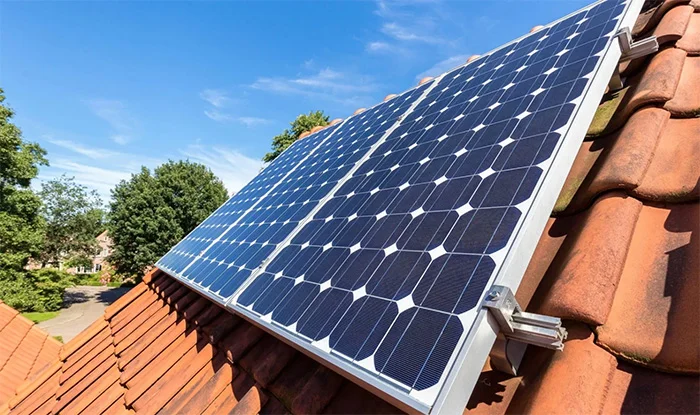
Repeated CEB and LECO tariff increases have shifted public attitudes toward rooftop solar, turning what was once a luxury investment for affluent households into a practical hedge for ordinary consumers and businesses, a former Ceylon Electricity Board General Manager told The Island.
The 2022 fuel shortage and prolonged power cuts changed the calculus for many families, the former GM said. Hotels and companies have moved toward large-scale rooftop systems to cut overheads and improve their environmental profile, while households increasingly view solar as a safeguard against future tariff hikes and supply uncertainty.
Sri Lanka supports rooftop solar through three policy mechanisms: net metering exports surplus household electricity to the grid in exchange for billing credits; net accounting allows credits to carry forward; and net plus enables users to sell all generated electricity to the national grid at an approved tariff. The frameworks have driven sustained private investment in renewable energy.
Constraints remain. Initial installation costs are still high for middle-income families despite long-term savings, and parts of the distribution network are outdated, with transformers in some areas unable to absorb large solar export volumes. Lengthy approval procedures and delays in finalising agreements with utility providers have discouraged prospective users.
Looking ahead, rooftop solar is expected to be central to Sri Lanka’s target of 70% renewable electricity by 2030. The next development phase is expected to involve hybrid systems combining solar with battery storage as lithium-ion prices fall, peer-to-peer energy trading via smarter networks, and bank green-financing or power-purchase-agreement models that reduce upfront costs.
The former GM said the country has a rare opportunity to transform its energy sector through distributed generation if administrative procedures are simplified and the grid is modernised. The push comes alongside the PUCSL’s pending tariff revision, the NSO grid-management modernisation tender and a sector-wide debate triggered by the CEB’s April rooftop solar shutdown.
Source: The Island.