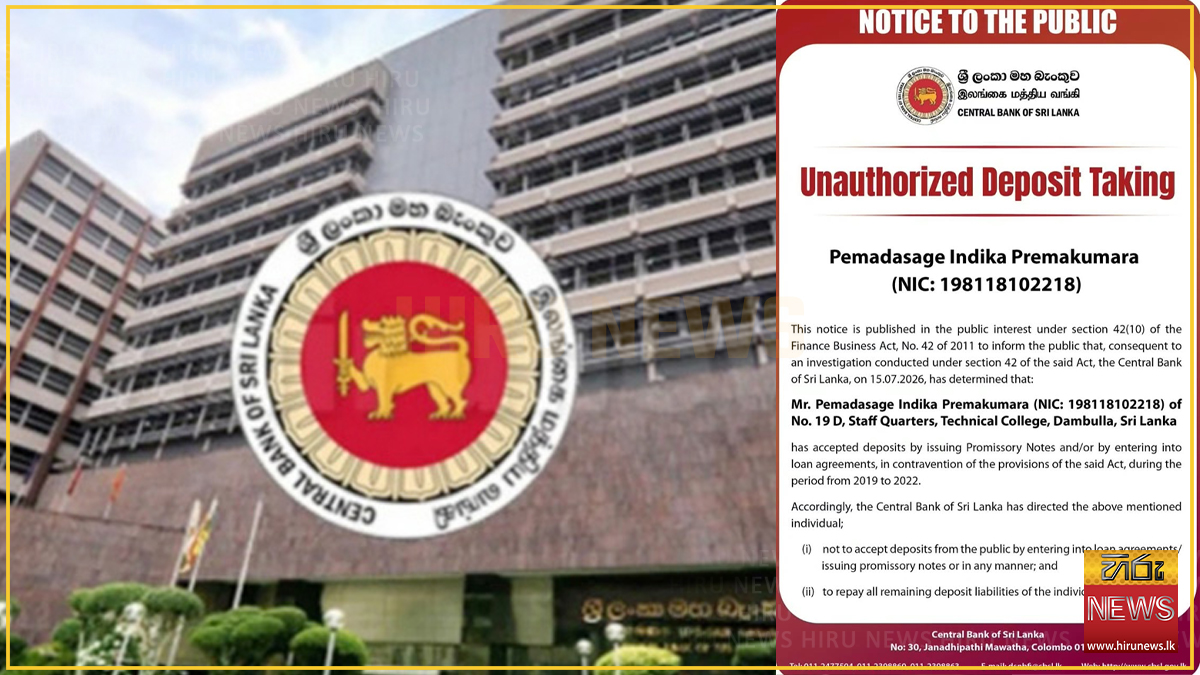
The Sri Lankan rupee depreciated sharply against the US dollar on Friday, with the Central Bank of Sri Lanka’s indicative selling rate climbing past Rs.334 in the steepest single-day move of the current cycle.
According to the CBSL, the buying rate rose from Rs.320.40 to Rs.324.45 and the selling rate from Rs.330.81 to Rs.334.24 — a Rs.4 jump in both directions in a single trading day, Newswire reported. Ada Derana said the selling rate had surpassed the Rs.334 mark.
The rupee also weakened significantly against a basket of major currencies including the Australian and Canadian dollars, the euro, the British pound and the Swiss franc, as well as against Gulf currencies — the Bahraini and Kuwaiti dinar, the Omani rial and the UAE dirham.
The latest move extends a steady slide. The selling rate had crossed Rs.330 on May 27, itself the highest level since the post-default recovery. Anil Jayantha Fernando, the Deputy Finance Minister, had earlier told parliament that the depreciation reflected global factors and was not a crisis, while CBSL Governor Nandalal Weerasinghe described the rupee as a “shock absorber” against the Middle East oil shock.
The depreciation is being driven by Sri Lanka’s elevated dollar oil bill, with CPC warning that fuel price reductions are unlikely before September because diesel barrels are trading around US$140–150 against pre-war levels of US$80–90.
The slide lands two days after the IMF Board released US$695 million under the combined fifth and sixth reviews. Mission Chief Evan Papageorgiou has explicitly called for greater exchange rate flexibility to rebuild external buffers, framing rupee depreciation as a buffer mechanism against external shocks.
Sources: Newswire, Ada Derana.