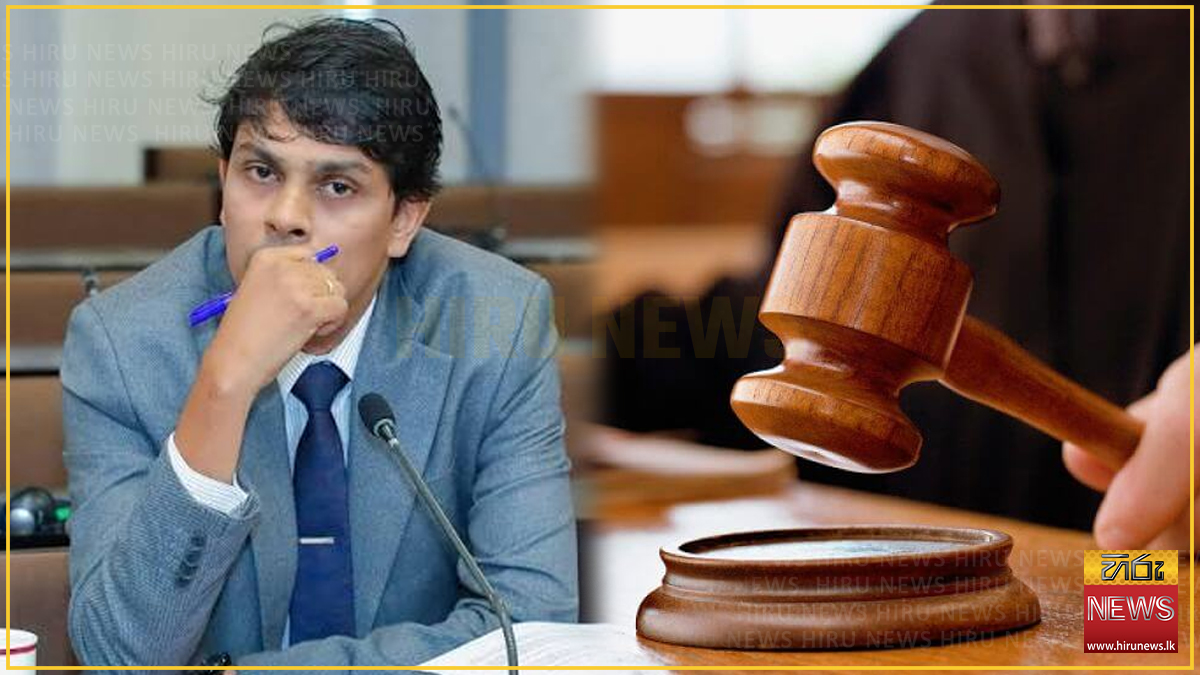
Colombo Fort Magistrate Pasan Amarasena will deliver a ruling on June 10 on a request to direct the Director General of Health Services to appoint a psychiatric medical board to examine former State Intelligence Service Director Major General (Retd.) Suresh Sallay, after the court on Thursday heard sharply contrasting submissions from the defence and the prosecution.
President’s Counsel Shavindra Fernando, appearing for Sallay, told the court that the findings of five consultant psychiatrists who examined the suspect required the court to consider granting relief under Sections 9B(3), 9B(4) and 9B(5) of the Prevention of Terrorism Act, including medical treatment and a suitable environment for his mental health condition. He further argued that authorities should determine whether the suspect had been subjected to torture or cruel, inhuman or degrading treatment while in custody.
Fernando said an earlier order had directed that a medical report be obtained on Sallay during CID custody, and that the suspect had subsequently been referred to a psychiatrist, a nutritionist and an ophthalmologist. The recommendations made by the medical board, he said, had not yet been implemented.
Additional Solicitor General Dileepa Peeris, appearing for the Criminal Investigation Department, strongly rejected the submissions and characterised the suspect’s claims as an “Oscar-worthy performance.” He said Sallay had been arrested on February 25 and was seeking extraordinary relief based on medical reports that had emerged only in May, well after his arrest. Had the suspect genuinely suffered from a psychiatric disorder, Peeris argued, it should have been disclosed much earlier through medical evidence.
The ASG said the defence appeared to be using the psychiatric reports to gain an advantage in related proceedings and to divert attention from the investigation. He rejected allegations of ill-treatment, telling court that Sallay meets with his lawyers every Wednesday, is allowed to meet his wife and child, and is given an opportunity each Friday to speak by telephone with his wife, child and mother. The CID, he said, had taken extensive measures to ensure the suspect’s welfare and security, and questioned why no complaint of ill-treatment had been raised with family members.
President’s Counsel Rienzie Arsecularatne, appearing for Cardinal Malcolm Ranjith as well as victims and families affected by the Easter Sunday attacks, told the court that the medical report submitted was not one prepared by a Judicial Medical Officer. He argued that the conditions said to be affecting the suspect were similar to the mental state commonly experienced by individuals in custody, and could arise in light of the actions allegedly attributed to the suspect.
Responding, Fernando rejected any suggestion of a conspiracy, saying the defence had received the medical reports on May 21 and filed the motion only on Wednesday. “This report has been prepared by a panel of five consultant psychiatrists … Consultant psychiatrists do not submit false reports,” he told the court, adding that the Director General of Health Services could not independently oversee any new examination because the post is a political appointment, and that the matter should be addressed independently by the Attorney General.
The hearing follows the Magistrate’s order on Wednesday directing the CID to respond to the PTSD motion filed by Sallay’s lawyers, which cited Judicial Medical Officer findings of post-traumatic stress disorder, severe depression and a risk of self-harm or suicide. Sallay has been named as a third suspect in the Easter Sunday attacks investigation and is being held in CID custody under detention orders.