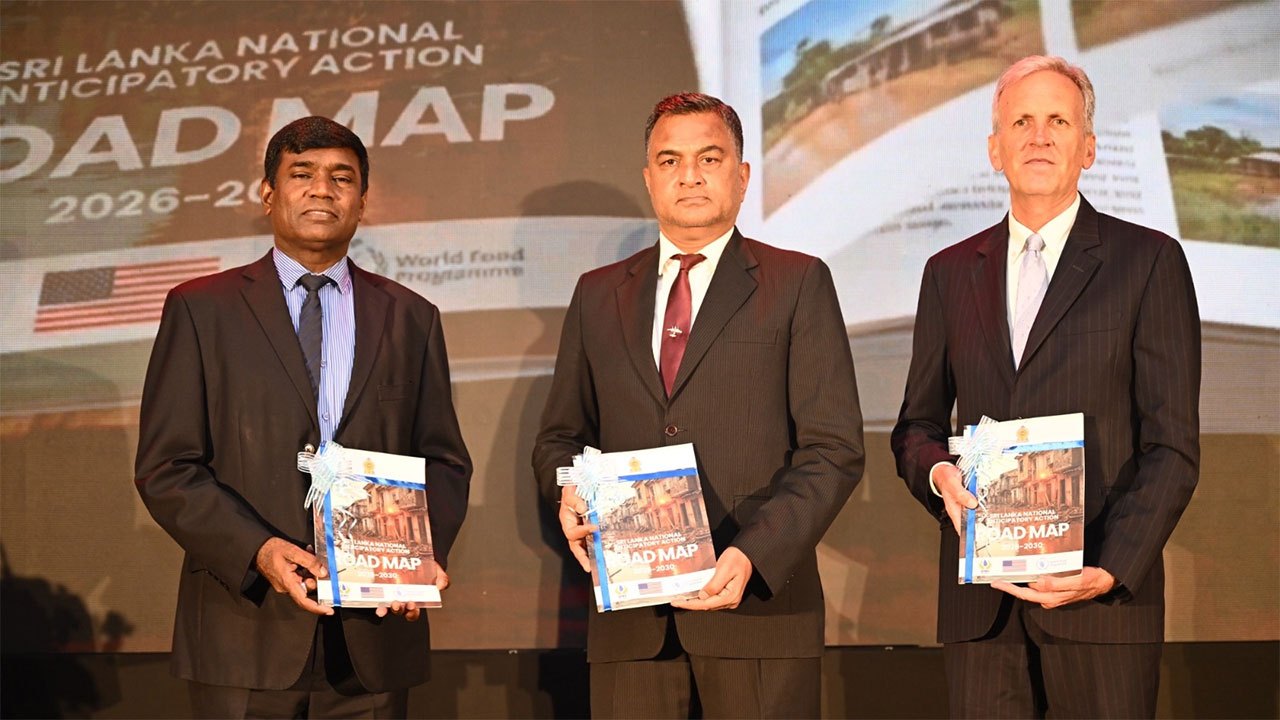
The Disaster Management Centre on Thursday launched Sri Lanka’s National Anticipatory Action Roadmap for 2026–2030, with technical leadership from the United Nations World Food Programme and funding from the United States, Ada Derana reported.
In a statement, WFP said the roadmap sets out a coordinated approach to anticipatory action across key sectors and is intended to strengthen Sri Lanka’s disaster preparedness through impact-based forecasting, early warning systems and forecast-based financing — the practice of releasing humanitarian funds before a hazard strikes, on the basis of pre-agreed triggers.
The roadmap was developed through the National Anticipatory Action Working Group, which brings together the DMC, WFP, UN agencies, international and local NGOs, civil society and private-sector partners. It is expected to support timely early action to reduce disaster risks and better protect vulnerable communities, the statement said.
The launch comes as Sri Lanka continues to absorb the consequences of Cyclone Ditwah — the November 2025 disaster that displaced thousands across multiple districts and prompted both a UN-led Humanitarian Preparedness Plan and IOM cash-based interventions across seven districts. Anticipatory action — releasing resources on forecast triggers rather than after impact — is widely seen by humanitarian agencies as faster and cheaper than reactive response.