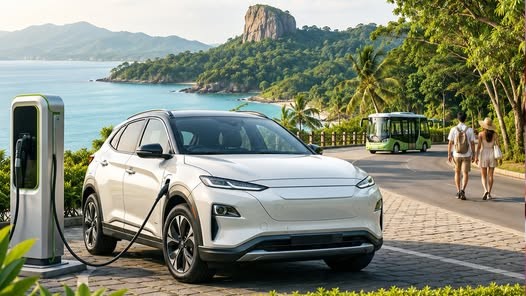
Sri Lanka’s government is considering transforming the country’s tourist zones into “Zero Emission” areas as part of a wider green tourism push, the Government Information Department said.
Steps to promote environmentally friendly electric vehicles (EVs) at tourist sites are being explored, the department said in a statement carried by EconomyNext on Thursday, with the necessary background and possibilities already studied.
“The primary hope is to transform these unique tourist zones into ‘Zero Emission’ zones in the future, utilising various investments and practical programs,” the statement said, framing the move as an attempt to give “new life to the green tourism industry in Sri Lanka.”
The announcement gives no specific list of sites, timeline or investment quantum, and no enforcement mechanism for restricting petrol or diesel vehicles inside designated zones was disclosed. The department said only that practical programmes would be developed alongside private investment to deliver the transition.
The proposal sits alongside a steadily expanding EV thread on the policy agenda. Energy expert Dr. Vidura Ralapanawe has pushed back on grid-strain concerns often raised against electric vehicle adoption, arguing that heatwave air-conditioning demand, not EVs, is the real driver of recent power shortages. Vehicle import rules have separately tightened, with a 50 percent customs surcharge imposed for three months from mid-May, although EV-specific carve-outs have not been detailed in the zero-emission tourist-zone announcement.
The zero-emission framing follows months of tourism-policy churn aimed at rebuilding visitor numbers after a sharp first-quarter slump. The Sancharaka Udawa 2026 trade exhibition at the BMICH last month focused on industry recovery, and a private-sector Sustainable Tourism Association — billed as South Asia’s first — is set to launch in August with Australian and Sri Lanka Tourism Development Authority backing.