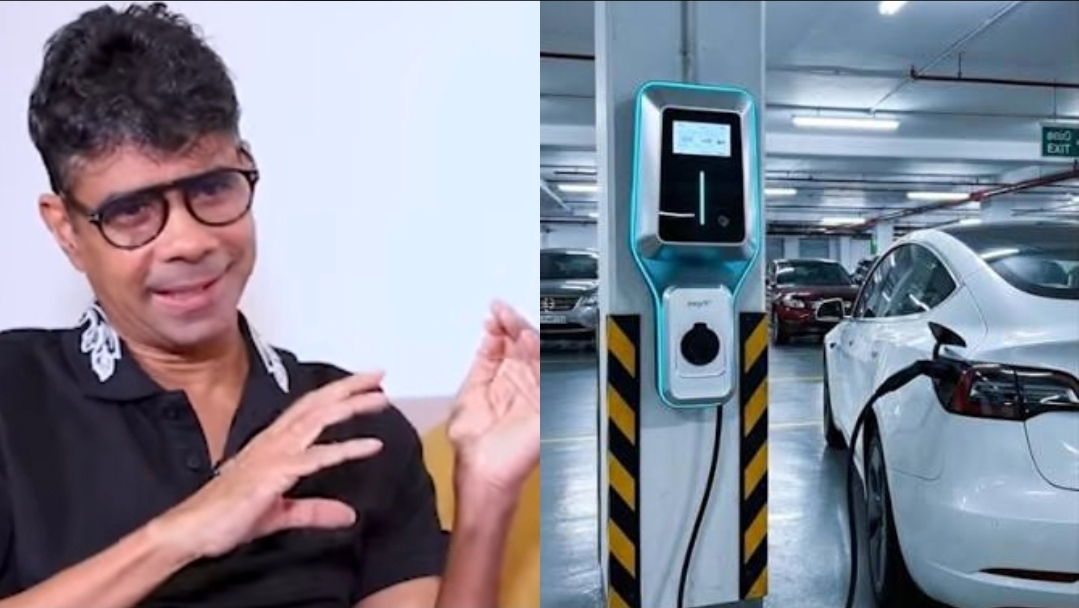
Energy expert Dr. Vidura Ralapanawe has publicly pushed back on claims that electric vehicles are overloading Sri Lanka’s power grid, describing the narrative as a “scientifically baseless myth” that does not stand up to basic demand data.
Speaking in an in-depth interview reported by Newswire on Thursday, Dr. Ralapanawe said EVs remain more energy-efficient than petrol and diesel vehicles even when the electricity they consume is generated from coal. Internal combustion engines, he argued, lose a large share of their energy as heat and mechanical friction, while battery-electric drivetrains retain a far higher proportion of the energy they draw.
“Even when emissions from coal-powered electricity are considered, EVs remain more energy-efficient,” he said. “The fuel required for a traditional vehicle to travel 100 kilometres contains enough energy to generate more electricity than an EV needs to travel the same distance.”
He directly rejected the widely-cited figure that EV charging adds a 250–300 megawatt burden to the national grid. Historical demand data from 2024 to 2026 shows a recurring January-to-March surge of roughly 300 MW, he said — and that pattern is driven by air conditioning use during heatwaves, not by vehicle charging. Even if every EV in the country charged simultaneously, total demand would still fall below that 300 MW figure, he added.
Dr. Ralapanawe warned that “certain stakeholders” were promoting fear-based narratives to slow EV adoption and preserve the country’s dependence on imported fossil fuels. He noted that modern EV batteries allow off-peak charging, which further reduces any impact on grid peaks.
The intervention lands in the middle of a bruising national debate over power supply. The National System Operator has sought a 53% tariff hike to cover Rs. 40 billion in coal-related losses, the Energy Minister faces a no-confidence motion on April 10, and reservoir levels at Castlereigh and Maussakelle are choking hydropower output. Ralapanawe’s argument is that EVs have become a convenient scapegoat while the real structural problems sit with coal quality and dry-weather hydro.