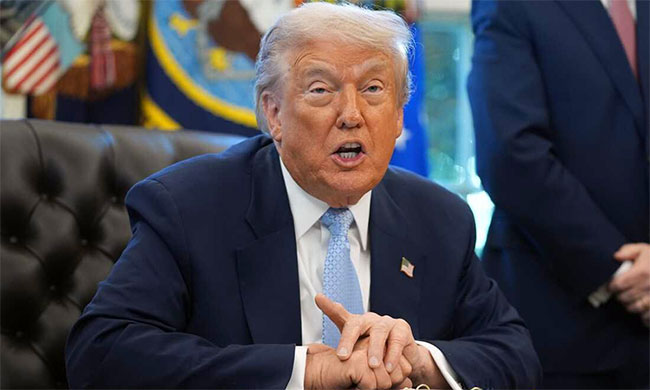
US President Donald Trump on Tuesday extended the two-week US-Iran ceasefire indefinitely, reversing his earlier assertion that it would lapse on Wednesday and sharply altering the near-term outlook for the Strait of Hormuz.
Trump said the extension was warranted because Tehran’s government was “seriously fractured,” and that the truce would now hold “until such time as” Iran’s leaders submit a “unified proposal” to end the war with the US and Israel. The BBC reported that the move came at the request of Pakistan, and that Washington would continue its naval blockade of Iranian ports.
The announcement followed the abrupt cancellation of Vice President JD Vance’s second trip to Pakistan for peace talks. According to Iranian state outlet Tasnim, Tehran’s negotiators informed their US counterparts through a Pakistani intermediary that they would not attend. “Attending the negotiations is a waste of time because the US prevents reaching any suitable agreement,” Tasnim reported.
An advisor to the speaker of Iran’s parliament, Mohammad Baqer Qalibaf, called the extension “a ploy to buy time” for a surprise strike, Reuters reported. The advisor said the continued US Navy blockade was “no different from bombardment and must be met with a military response.”
Earlier Tuesday, Trump had told CNBC’s “Squawk Box,” “I don’t want to do that,” when asked whether he would extend the ceasefire — language that was superseded hours later by the indefinite extension. Pakistani Prime Minister Shehbaz Sharif thanked Trump for the move.
The decoupling of the ceasefire timeline from a fixed deadline, combined with the sustained US blockade of Iranian ports, keeps the Hormuz risk premium elevated for Sri Lanka’s fuel import bill while removing the immediate expiry cliff that had pressured CPC shipment planning through mid-week.