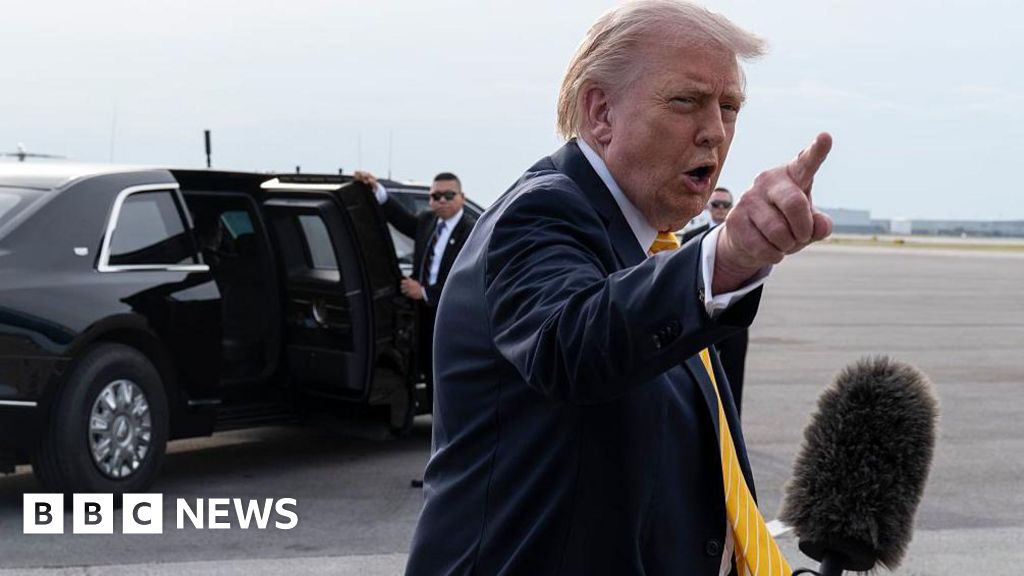
US President Donald Trump on Sunday announced “Project Freedom”, an initiative under which Washington will guide ships stranded in the Strait of Hormuz to safety beginning Monday, May 4 — and warned that any interference with the operation “will have to be dealt with forcefully.”
“For the good of Iran, the Middle East, and the United States, we have told these Countries that we will guide their Ships safely out of these restricted Waterways, so that they can freely and ably get on with their business,” Trump wrote on Truth Social, without naming the participating nations. Iran has severely restricted Hormuz traffic since the war began in February, while the US has enforced a parallel naval blockade of Iranian ports.
The announcement came as Iran said it had received Washington’s response to its latest peace proposal, delivered through Pakistani mediation. Foreign Ministry spokesman Esmaeil Baghaei said Tehran was reviewing the US reply but stressed that “at this stage, we do not have nuclear negotiations” — ruling out the central American demand. Trump separately told Israel’s Kan News that the Iranian proposal was unacceptable.
Iran’s 14-point plan, sent in response to a nine-point US offer for a two-month ceasefire, calls for Washington to withdraw forces from near Iran’s borders, end the naval blockade, halt Israel’s offensive in Lebanon, and conclude an agreement within 30 days. It urges both sides to focus on “ending the war” rather than extending the existing ceasefire. Asked by the BBC whether US strikes inside Iran could resume, Trump said it was “a possibility” if Tehran “misbehaves”.
Friday marked the 60th day since Trump formally notified Congress of strikes against Iran on March 2. By law, a US president must obtain Congressional approval within that window or cease hostilities. Trump wrote to lawmakers arguing the war had been “terminated” since the April 8 ceasefire and that the clock was paused, despite the continuing port blockade.
Republican senators are publicly restive. Missouri’s Josh Hawley urged the administration to begin redeploying forces, while Alaska’s Lisa Murkowski warned that abrupt withdrawal would leave Iranian capabilities intact but rejected a “blank check for another endless war.”
The escort plan, if it holds, could ease the Hormuz risk premium that has driven up Sri Lanka’s fuel import costs and emboldened recent attacks on shipping, including Sunday’s swarm-craft strike on the bulk carrier Minoan Falcon.
Markets were unmoved on Monday morning. Brent futures for July stood at $108.11 as of 05:00 GMT, down 0.06 percent, with traders seeing little hope of a quick resolution. US Central Command said in a follow-on statement that it would “support” rather than escort vessels, and that the mission would involve guided-missile destroyers, more than 100 land- and sea-based aircraft, multi-domain unmanned platforms and 15,000 service members. The UK Maritime Trade Operations agency reported that a tanker had been struck by “unknown projectiles” off the UAE coast on Monday, hours after a bulk carrier reported being attacked by multiple small craft off Iran; no crew were harmed in either incident. Goldman Sachs estimates that the closure and attacks on energy infrastructure have reduced global daily production by 14.5 million barrels. Brent has not dropped below $100 a barrel for nearly two weeks, and only 20 vessels crossed the strait on Wednesday, the most recent day for which Windward ship-tracking data was available — against an average of 129 daily transits before the war.
Sources: BBC, Newswire / Al Jazeera.