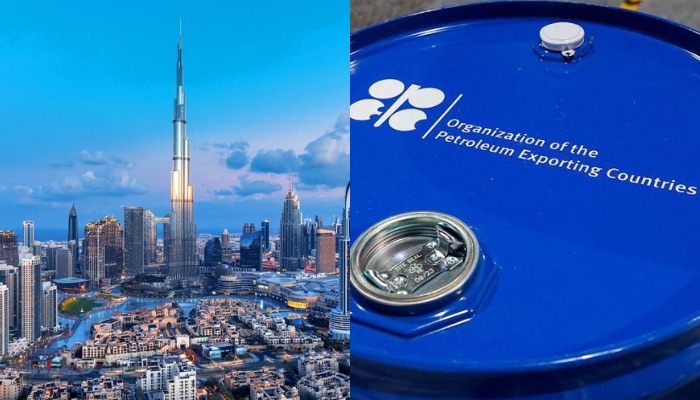
The United Arab Emirates announced on Tuesday (April 28) that it is leaving OPEC and the wider OPEC+ alliance from May 1, in a move that weakens cohesion within the world’s largest producers’ bloc and removes a major member from the Saudi-led system of production quotas.
UAE Energy Minister Suhail Mohamed al-Mazrouei told Reuters that the decision followed a careful review of the country’s energy strategies. Asked whether Riyadh or other partners had been consulted, he said the UAE had not raised the matter with any other country. “This is a policy decision, it has been done after a careful look at current and future policies related to level of production,” he said.
Departing the group frees the UAE to use its full crude capacity of around 5 million barrels per day without reference to OPEC quotas, eroding Saudi Arabia’s ability to defend prices through coordinated cuts. Al-Mazrouei said the move was unlikely to have a major immediate market impact given existing supply disruptions tied to the Iran conflict and the near-closure of the Strait of Hormuz.
The exit also draws attention in Washington, where President Donald Trump has publicly criticised OPEC for “ripping off the rest of the world” through inflated prices.
For Sri Lanka, a net oil importer that spends close to a fifth of its import bill on energy, the loss of UAE-side coordination raises the prospect of greater price volatility on top of the Hormuz premium already pushing up CPC procurement costs. The rupee closed at Rs.319.00/320.00 against the US dollar on Tuesday. On the same day, President Trump said Iran had asked Washington to reopen the Strait of Hormuz amid what he described as the country’s “state of collapse.”