The United Nations demanded on Monday (18) that Israel take measures to prevent acts of “genocide” in Gaza, and pointed to indications of “ethnic cleansing” in the Palestinian territory and the occupied West Bank, in a sharp escalation of UN language on the conflict.
A fresh UN rights office report said Israel’s actions in Gaza since the start of the war in October 2023 involved “gross violations” of international law, amounting in many cases to “war crimes and other atrocity crimes”. It is the first time the world body itself, rather than independent UN experts or rights groups such as Amnesty International and Human Rights Watch, has framed the violations in those terms.
UN rights chief Volker Turk called on Israel to ensure compliance with a 2024 International Court of Justice order requiring measures to prevent genocidal acts. Israel, he said, should ensure “with immediate effect that its military does not engage in acts of genocide” and take “all measures to prevent and punish incitement to commit genocide.” Israel has repeatedly and forcefully rejected such allegations.
The report covers the period from October 7, 2023 — when a Hamas attack killed 1,221 people in Israel, most of them civilians — to May 2025. It also condemns “serious violations” by Palestinian armed groups during and after the initial attack, including the torture and sexual abuse of hostages held in inhumane conditions.
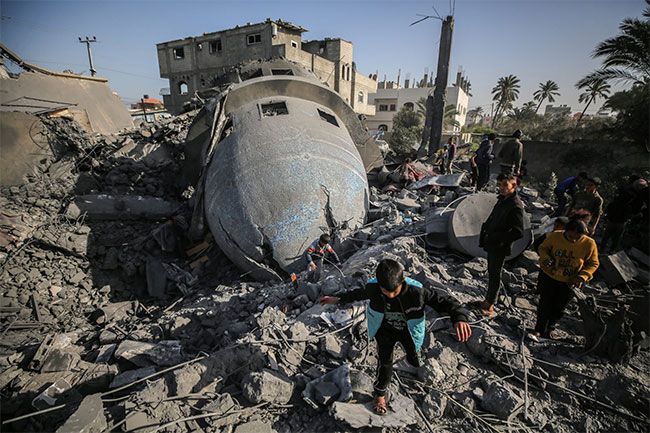
Most of the focus, however, falls on Israel’s military campaign in Gaza, which has killed more than 72,000 people according to the Hamas-run health ministry, figures the UN considers reliable. Hundreds of thousands remain in tents despite an October 2025 ceasefire.
“The ceasefire diminished the immense scale of violence up to that point, and opened some modest humanitarian space,” said Ajith Sunghay, head of the UN rights office in the occupied Palestinian territories, in Geneva. “But killings and the destruction of infrastructure have continued on an almost daily basis.”
The report says a large proportion of the killings appear unlawful and points to repeated Israeli attacks on healthcare facilities, journalists, humanitarian actors and police. Living conditions in much of Gaza had been rendered “incompatible with Palestinians continued existence as a group,” it warned.
In the West Bank, the office said the use of “unnecessary and disproportionate force” had produced hundreds of unlawful killings. Taken together, the violations indicated a pattern of “collective punishment” and “forced displacement, emptying and ethnic cleansing of large parts of the Occupied Palestinian Territory.”
“In a context like this, lack of action is not passivity. It is a license,” Sunghay said.