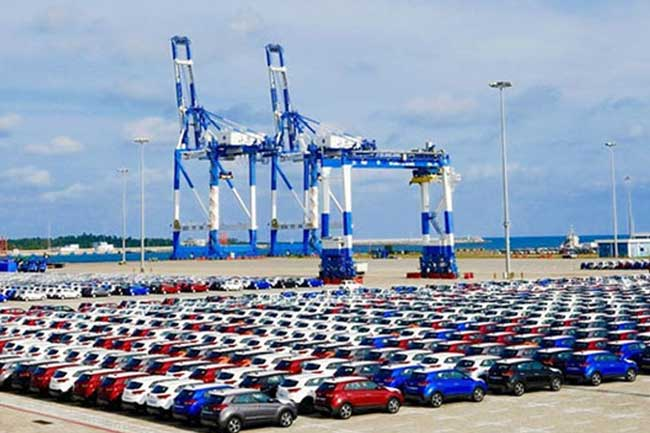
Sri Lanka spent USD 2.04 billion on vehicle imports in 2025 — the third-highest annual outlay on record — after the government lifted the long-standing import freeze in January, according to the Central Bank’s Annual Economic Review for 2025.
The figure is exceeded only by USD 2.12 billion in 2015 and USD 2.09 billion in 2018, both years that preceded balance-of-payments crises and successive rounds of vehicle import restrictions. The 2025 outlay marks a sharp reversal from the import suppression of the post-2022 crisis years, when restrictions cut the annual bill to a fraction of pre-crisis levels.
The Central Bank attributes the surge to the phased removal of vehicle import restrictions, completed by January 2025. The pace of arrivals accelerated through the second quarter, with imports rising sharply from April onwards as dealers cleared backlogs and consumers responded to renewed availability and pre-budget tax expectations.
The 2025 import bill closely tracks the post-easing pattern visible in monthly registration data. The Department of Motor Traffic recorded an all-time monthly high in March 2026 ahead of an expected tax revision, and processing delays at the RMV have lengthened in step with the import surge.
The CBSL has previously flagged that vehicle imports — historically among the most significant single-category drains on the current account — will need to be balanced against export earnings and worker remittances to prevent a renewed external pressure point. The 2025 figure suggests that the easing of restrictions has begun to materially shift the import composition, with implications for the central bank’s reserve trajectory in 2026.
Source: Ada Derana.