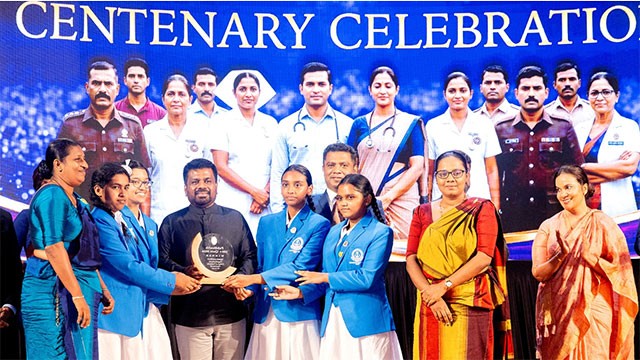
Sri Lanka marked 100 years of its public health service on Monday with a national celebration at the Bandaranaike Memorial International Conference Hall (BMICH) in Colombo, held under the patronage of President Anura Kumara Dissanayake.
The service traces its origins to 1926, when the Kalutara National Health Unit was established as the first field health unit in South Asia, Ada Derana reported. The unit became a model for community health work that was later replicated across the country and the wider region.
Early health units concentrated on preventing infectious diseases, health education, and maternal and child welfare — areas that went on to form the backbone of Sri Lanka’s public health infrastructure. Over the following decades the model expanded into an extensive network of Medical Officer of Health (MOH) divisions now numbering in the hundreds, staffed by public health teams working at community level.
Sri Lanka’s public health system is widely regarded as one of the more successful in South Asia, credited with strong immunisation coverage, low maternal and infant mortality, and the control or elimination of several communicable diseases, including malaria and, more recently, progress against filariasis and measles.
The centenary event brought together health officials, public health inspectors and field staff to mark a century of preventive care that continues to underpin the country’s broader healthcare system.