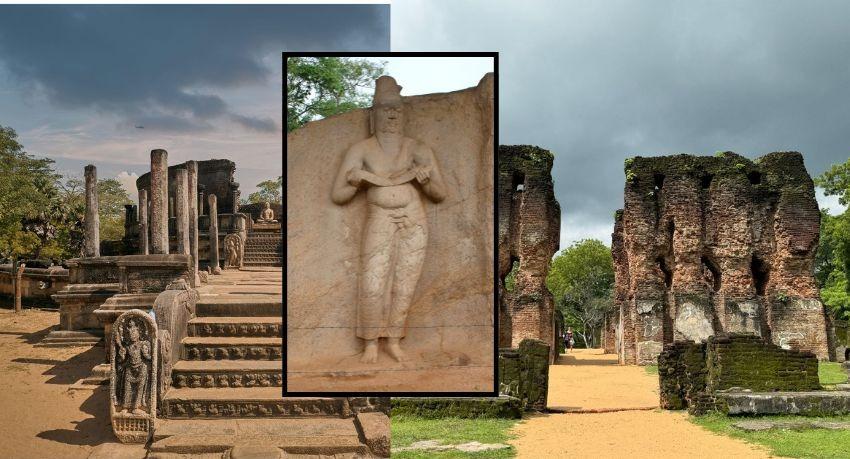
A new archaeological excavation aimed at explaining how the ancient Polonnaruwa Kingdom developed and why it declined has begun, in a joint project between the University of Kelaniya and Australia’s La Trobe University.
The dig is the fifth phase of a long-term study of Polonnaruwa’s urbanisation that started in 2024. Senior Professor of Archaeology at the University of Kelaniya, Prof. Prishantha Gunawardhana, said the work is being carried out with support from the Department of Archaeology, the Central Cultural Fund, the University of Jaffna and the Postgraduate Institute of Archaeology of the University of Kelaniya.
Mounds revealed by LiDAR
The current phase focuses on the area around the northeastern gate of Polonnaruwa’s outer fortifications and the surroundings of the Lotus Pond in the outer city. The sites were chosen on the strength of an aerial survey carried out last year.
“The main reason for selecting this area was the LiDAR survey we conducted last year. Across this zone, we observed several elevated land features. We identified around 20 to 30 mound-like formations rising approximately 70 to 80 centimetres above ground level,” Gunawardhana said.
The team wants to establish how the remains associated with those mounds relate to one another and what they can reveal about the city’s layout. A second dig is under way behind Siva Devale No. 2, where Gunawardhana said the aim is to measure the depth of the cultural layers and build a scientific chronology for the site from the evidence recovered.
Earlier findings
Previous phases have already reshaped the understanding of the ancient capital. Archaeologists established that the open ground in front of King Parakramabahu’s Royal Palace and Audience Hall had once been an elaborate water garden. Ground Penetrating Radar and LiDAR surveys also located the remains of several ancient ponds buried beneath the present landscape.
La Trobe University is providing technical support, bringing additional scientific methods to the survey work.
Polonnaruwa was Sri Lanka’s second ancient kingdom and served as the island’s capital between 1070 and 1215 AD. Its inner precinct holds some of the country’s best-known monuments, including works commissioned by King Vijayabahu I, King Parakramabahu the Great and King Nissanka Malla.