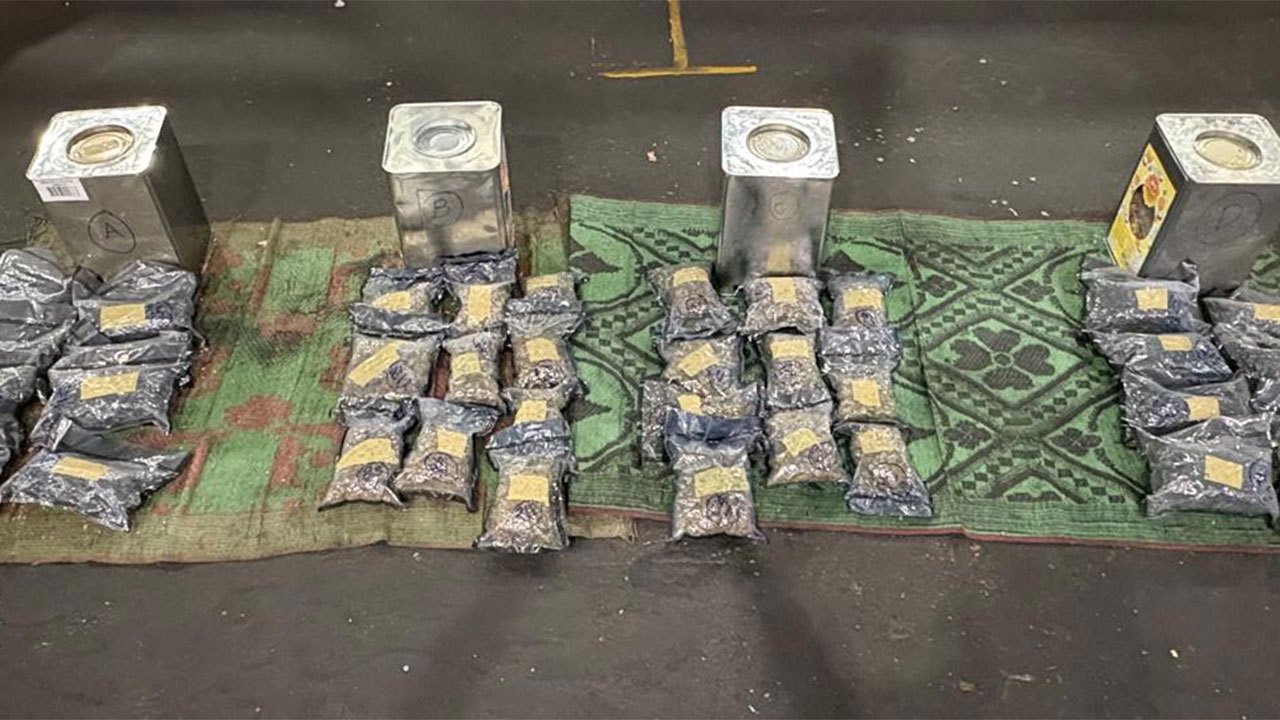
Sri Lanka Customs officers at Bandaranaike International Airport have seized more than 10 kilogrammes of cannabis-related narcotics with an estimated street value of Rs. 106.08 million, concealed in an air cargo consignment sent from Thailand.
The consignment arrived on SriLankan Airlines flight UL405 from Bangkok on July 24 and was declared as a gift shipment, Customs officials said.
Officers examined the cargo on July 31 at a warehouse, in the presence of authorised persons, and found suspected narcotics packed in polythene bags and hidden inside metal containers. Newswire identified the inspection site as the TRICO UPB warehouse.
A final inventory recorded 10.608 kilogrammes, including wrapping, of cannabis-related substances — marijuana, hashish and hashish oil.
Investigations are continuing.
A week between arrival and inspection
The seizure follows a seven-day gap between the consignment’s arrival at the airport and its examination, a routine interval for cargo held pending clearance rather than an indication of any delay in the detection itself.
Declaring a shipment as a gift is a recurring method in air-cargo smuggling, as gift consignments carry lower declared values and can attract less scrutiny than commercial freight.
Part of a pattern Customs flagged this week
The detection lands days after Sri Lanka Customs publicly identified Thailand as an emerging trafficking route into the country.
At a briefing on July 31, Customs officials said they had seized more than 396 kilogrammes of narcotics worth about Rs. 4.5 billion over nine months, and that several travellers arriving from Thailand — including Buddhist monks — had been found carrying narcotics. Officers said tourists visiting Thailand were being approached by strangers and persuaded to carry parcels back to Sri Lanka, often without knowing the contents.
That warning concerned passengers and their baggage. Friday’s detection involved unaccompanied freight, indicating the route is being worked through cargo channels as well.
Customs has said it is applying enhanced scrutiny to shipments from countries identified as trafficking sources and selecting containers for inspection through risk-management systems.