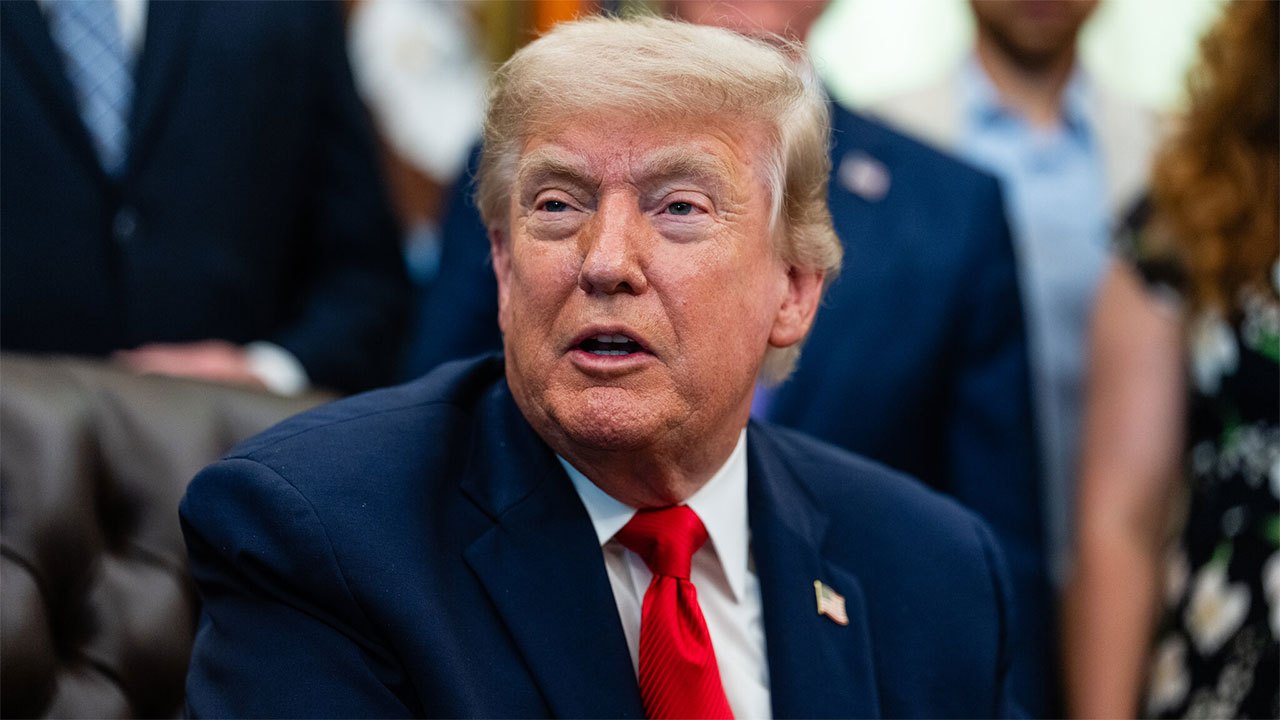
US President Donald Trump has called off the large-scale strike on Iran that had been planned for this weekend, saying the “perimeters of a deal” have been agreed.
Trump announced the reversal on Truth Social late on Saturday, a day after US media reported that Washington and Israel were preparing to hit Iranian energy infrastructure. He said the decision followed requests from Iran and other Middle Eastern countries to “hold off any attack in that the perimeters of a deal has [sic] been agreed to,” and that he had agreed on condition the deal is concluded quickly.
Crucially for Sri Lanka, Trump said the agreement would bring the “Immediate, Complete, and Total OPENING OF THE HORMUZ STRAIT” and an end to what he called “Iran’s nuclear threat.”
There was no immediate response from Tehran. Earlier on Saturday, Iranian Foreign Minister Abbas Araghchi told his Saudi counterpart that any US or Israeli attack would meet a “proportionate response.” Axios reported that Saudi Crown Prince Mohammed bin Salman called Trump on Saturday urging him to cancel the strikes and return to negotiations. The US State Department issued security alerts for Americans in 10 countries in the region the same day.
No deal has been signed, and the strait remains closed as of Sunday morning.
What had been reported on Friday
US President Donald Trump has instructed the military to carry out a fresh assault on Iran as early as this weekend, the Wall Street Journal reported on Friday, citing unnamed US officials. The paper said the operation is intended to force Tehran into surrendering.
The reported order has not been confirmed, and accounts differ on how far the decision has gone. CBS News, reporting the same planning, said the United States and Israel are preparing one of the harshest bombing campaigns of the war to date against Iranian energy infrastructure, with strikes possible throughout the weekend — but that “the president has yet to give the final ‘go’ orders.” A Pentagon spokesman declined to comment on the reports, saying only that the US military is “locked and loaded” and ready at any time.
Speaking at a Cabinet meeting at Camp David on Friday, Trump said: “We’ll be hitting them very hard,” adding, “And at some point they’ll say we just can’t take it anymore.” He told reporters he was “losing faith” in the Iranians because “they do lie and do, they do misrepresent.”
White House Press Secretary Karoline Leavitt said: “Iran will continue to pay until they come to the table in, what President Trump deems, a meaningful way.”
CBS reported that power stations and oil refineries are among the targets under consideration, and that there was discussion of concluding the campaign before financial markets open on Monday, though no end point was fixed. Rights groups have warned that deliberate strikes on civilian infrastructure could constitute war crimes. West Texas Intermediate crude passed USD 86 a barrel in post-settlement trading on Friday after the CBS report.
Tehran says it has a response ready
A senior Iranian official told the semi-official Tasnim news agency that Tehran has a comprehensive plan to respond, calling the reported strike plans a form of “madness.” The response would include “the vital infrastructure of the Zionist regime and the energy infrastructure of the US in the region,” the official said.
Iran’s National Security Council separately warned that if the US continues its naval blockade of Iran’s southern ports, the closure of the Strait of Hormuz would be tightened further and other straits could also be shut.
The exchanges follow an Iranian drone attack early on Friday on US military assets at Kuwait’s Ahmad al-Jaber airbase, which the Iranian army said targeted hangars, satellite communications and equipment warehouses in retaliation for US strikes the previous day. Kuwait’s military said it engaged and destroyed drones entering its airspace.
The war began on February 28 with joint US-Israeli strikes on Iran, after which Tehran closed the Strait of Hormuz. Iranian drone and missile attacks on Gulf states have continued since, including strikes on US bases in Kuwait in July. A joint operation with Israel would mark Israel’s return to combat after it stood down during a US-brokered truce; an Israeli official told CBS that Israel was unaware of any decision to restart full operations.
What it means for Sri Lanka
Sri Lanka imports virtually all its crude and refined fuel, and the Hormuz closure has kept import costs volatile since February. Crude above USD 86 puts pressure on the Ceylon Petroleum Corporation weeks after it warned the President of alarm in oil markets, and immediately after it announced no fuel price revision for August. Prices had eased in late July on reports of a pause in US operations — a move now reversed.
The Asian Development Bank approved a USD 200 million loan on Friday explicitly to help Sri Lanka absorb the economic pressure from the Middle East conflict. The World Food Programme has estimated that the war has pushed 1.3 million Sri Lankans into food insecurity.
The reopening of the Strait of Hormuz, named by Trump as a term of the proposed deal, would matter more to Sri Lanka than the pause in strikes itself. The closure has been the single largest driver of the country’s import costs since February, feeding into fuel prices, electricity generation costs and the food-price pressure the WFP has tracked. A confirmed reopening would ease that channel directly — but Tehran has not commented, and a similar arrangement announced in April did not hold.
Update (August 2): Tehran responds
Iran has since denied asking the United States to hold off, with its Mehr news agency calling Trump’s account “nothing but a new lie” and saying the armed forces remain on high alert. Iran’s Fars news agency said the Strait of Hormuz will remain closed as long as Washington maintains its hostile actions, and reported ships still held in the waterway’s northern corridor on Sunday. The reopening Trump named as a term of the deal has not materialised.