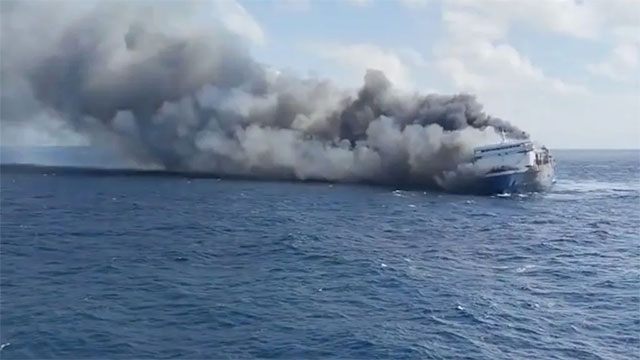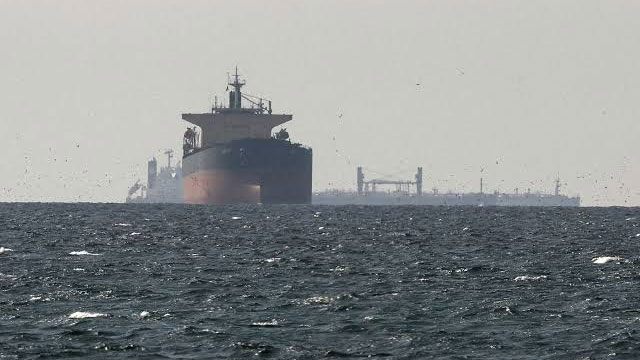
The threat to ships carrying oil in the Middle East is at its worst point since the Iran war began, shipping analysts say, after a run of attacks closed off the alternative route that had been absorbing traffic diverted from the Strait of Hormuz.
“In terms of threat to the trade of crude, we’re at the worst period that we’ve been in since this crisis began,” said Matthew Wright, an analyst at the ship-tracking firm Kpler, in a BBC report carried by Ada Derana.
Eight ships passed through the Strait of Hormuz on Sunday and 11 on Saturday, against more than 100 a day before the war, according to Kpler. Traffic recovered after the temporary US–Iran peace deal struck in early June, then fell again when strikes resumed about a month later. Many vessels are “going dark” to cross the strait, switching off their transponders to avoid detection.
The fallback route closes
For much of the war, some tankers carrying Saudi crude had used a Red Sea lane running between the kingdom and west Africa instead. That option is now under attack.
Yemen’s Houthi movement declared a blockade on Saudi Arabia’s Red Sea ports on 20 July and the UK Maritime Trade Operations agency has logged several attacks on ships in the past week. Six Saudi-flagged supertankers returning empty from Asia have changed course in the Gulf of Aden and are sailing for southern Africa rather than risk the Bab al-Mandeb chokepoint, Al Jazeera reported, citing tracking data from LSEG and MarineTraffic.
“It’s a problem stacked on top of a problem,” Wright said. Tim Wilkins, managing director of the tanker owners’ body Intertanko, said the industry faced “a broadening, deteriorating, and increasingly complex security situation” now reaching Saudi waters and parts of the Red Sea.
Twenty-eight commodity vessels transited Bab el-Mandeb on Saturday, six with transponders off, Kpler said. Overall traffic is running at about half pre-attack levels, but ships loading crude for export to Asia have fallen to roughly four a day — the lowest since the war started.
Why it matters for Sri Lanka
That last figure is the one that reaches Colombo. Sri Lanka’s fuel, power generation and food import costs all run through Asia-bound crude flows now at a wartime low.
Iran has said no deal is imminent: foreign ministry spokesperson Esmaeil Baghaei said any agreement with Oman over a safe route would not lift restrictions while US “aggression” continued, even as Trump said talks would begin Monday.
Nor would a reopening bring quick relief. Hapag-Lloyd said most ships could leave the region quickly, but restoring normal cargo flows would take three to four months because services have been suspended and vessels redeployed.
The Ceylon Petroleum Corporation held fuel prices unchanged for August while absorbing heavy losses on diesel, and the World Food Programme estimates the war has pushed 1.3 million Sri Lankans into food insecurity.