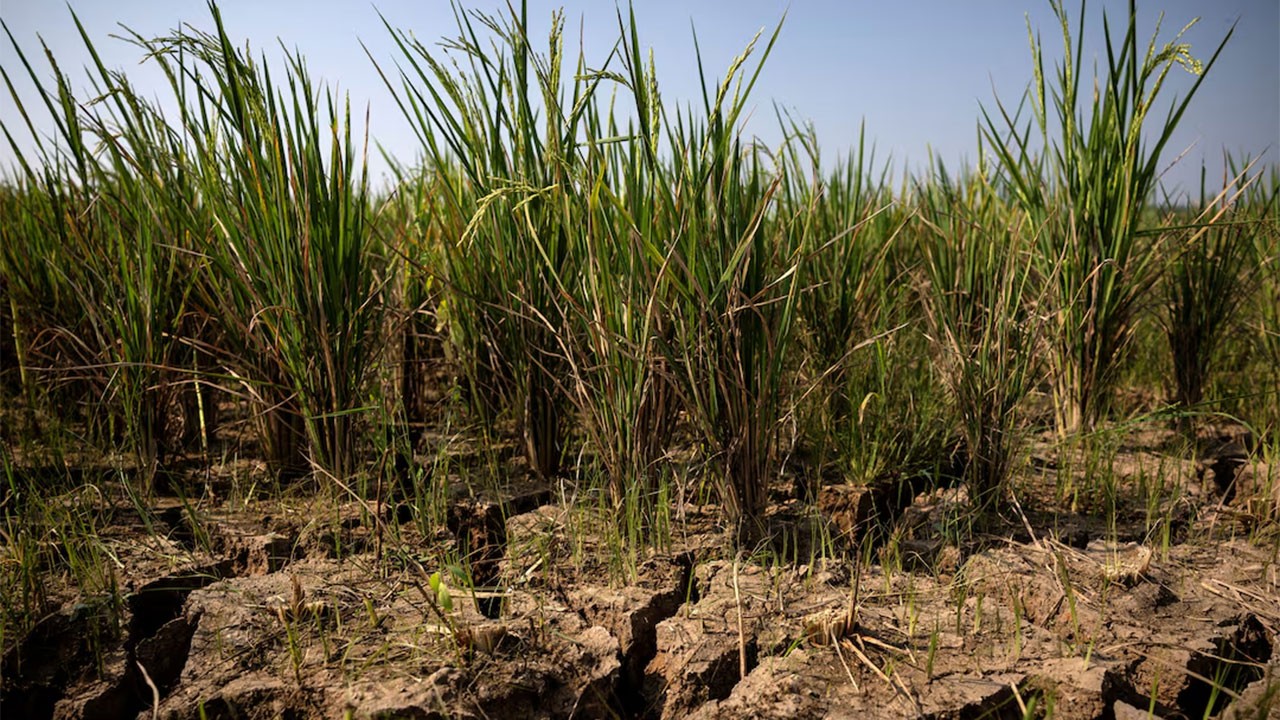
A strengthening El Niño could push nearly 49 million more people into acute food insecurity by the end of 2027, the UN World Food Programme said on Wednesday, warning that governments and aid agencies need to act before the worst impacts arrive.
The agency put the probability of a very strong El Niño event at 81%, with Pacific sea surface temperatures at their warmest levels since at least 1982 and the event potentially becoming the strongest since 1950.
Drawing on an analysis of 45 countries judged vulnerable to El Niño, WFP estimates the number of people facing acute food insecurity could rise by almost 49 million to a total of 274 million — an increase of 22% over the baseline population already at crisis level or worse.
“El Niño is a massive threat to the food security of millions who are already vulnerable,” said Carl Skau, WFP’s Acting Executive Director. “The sooner we help families to prepare for these climate shocks, the greater our ability to save lives and protect livelihoods. Severe floods and droughts can quickly push communities from coping to crisis. WFP is already ramping-up early response efforts in eight countries, and we stand ready to do even more.”
Central America and Southern Africa are projected to be hardest hit, with food-insecure numbers rising 83% and nearly 75% respectively. Southern Africa, and South America and the Caribbean, could each see more than 12 million additional people fall into acute food insecurity.
Data gaps and funding cuts
Jean-Martin Bauer, director of WFP’s Food Security and Nutrition Analysis Service, said global food markets entered the El Niño period in a relatively strong position after good harvests in 2025, but warned that conflict in the Middle East and weather-related crop losses could add upward pressure on prices.
Funding cuts from US and European donors in 2025 are hampering efforts to monitor the crisis. WFP conducted about 1.1 million household surveys in 2024, compared with roughly 800,000 in 2025, with data collection falling further this year.
“At a time when you have a risk like an El Niño, it is important to have high-frequency data collection,” Bauer said.
Richard Choularton, director of WFP’s Climate and Resilience Service, said the agency has scaled up anticipatory action programmes in 18 countries, reaching more than 1.3 million people this year with cash and other assistance.
The South Asia angle
The report projects significant impacts across South and Southeast Asia, where drought risks, uneven monsoons and localised flooding could disrupt agricultural production. It does not single out Sri Lanka.
Sri Lankan agencies have been preparing for the same event for months. President Anura Kumara Dissanayake chaired preparedness talks in June warning of conditions comparable to 2016-17, the Disaster Management Centre has flagged the possibility that seawater desalination may be needed, and the Met Department has cautioned that El Niño could bring heavy October-November rainfall and floods rather than drought alone. A dry spell deepened across the island in late July, with the Irrigation Department reporting reservoirs at 42% of capacity while maintaining that drinking water is secure to October.
Ada Derana carried the report in Sri Lanka, attributing it to Reuters.
Sources: Ada Derana, UN News, World Food Programme.