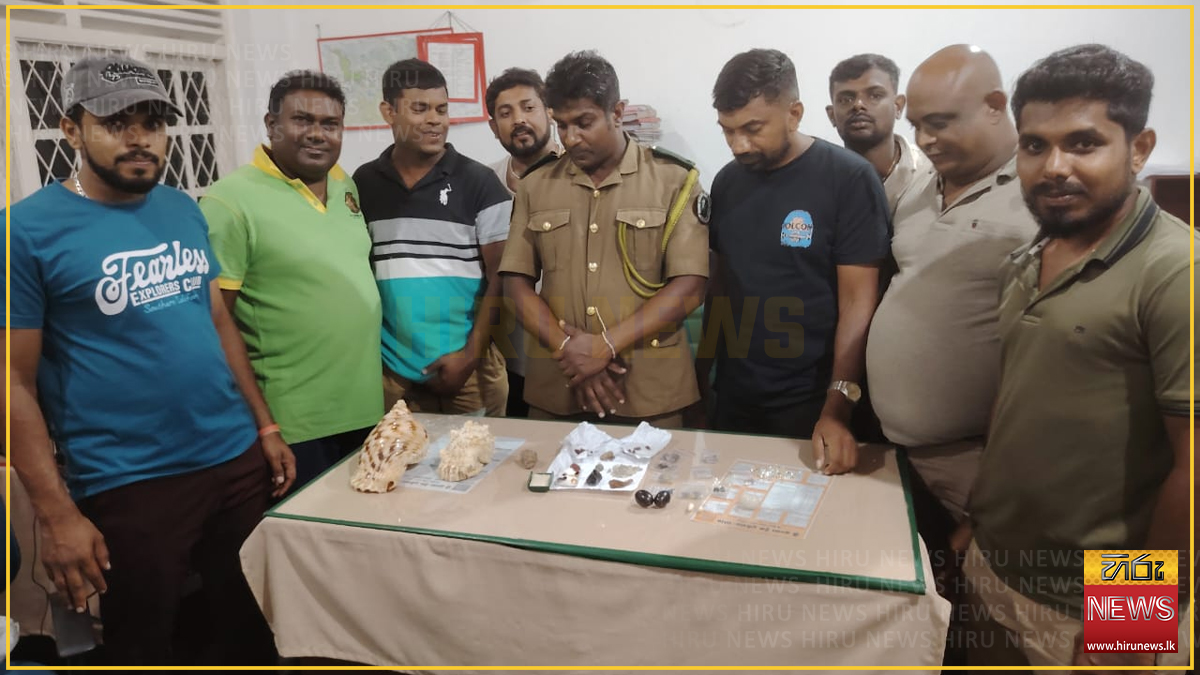
The Kurunegala Magistrate’s Court on Saturday ordered three men to pay Rs. 175,000 each — Rs. 525,000 in total — over the illegal possession of rare seashells and offering them for sale, Hiru News reported.
The Magistrate also ordered a seized mobile phone and the animal parts confiscated, and directed that they be handed to the Director General of Wildlife Conservation.
An eight-month gap
The three were arrested on 5 January in the Malkaduwawa area of Kurunegala. The sentence came eight months later, on 5 September.
The arrest followed a joint raid by officers of the North Western Assistant Director’s Office, Ritigala Range officers and the Kurunegala Special Task Force, acting on intelligence provided by the Air Force — an unusual contributor to a wildlife trafficking case, and one Hiru does not explain.
What was actually seized
Officers recovered two shells of dead marine specimens of the species Charonia tritonis and Tutufa bubo.
Hiru’s report describes the case as involving Valampuri shells. That term normally refers to the sacred right-turning chank prized in Hindu and Buddhist ritual, and the two species named are different animals — Charonia tritonis is the giant triton, and Tutufa bubo the giant frog snail. Both are large, collectible marine gastropods protected under Sri Lankan conservation law, and “Valampuri” is used loosely in local reporting for rare conch and triton shells. The report does not reconcile the label with the species list.
The scale is worth noting: two shells drew a fine of over half a million rupees. Giant tritons prey on crown-of-thorns starfish, which damage coral reefs, and their removal is treated as a reef-conservation matter rather than simply a collecting offence.
Context
Wildlife-trophy prosecutions of this kind reach the courts regularly. Officers in Galewela arrested suspects over deer antlers and conch shells, and a Kotte case ended in a Rs. 150,000 fine over antlers. Hotel managers in Kegalle were arrested over mounted deer heads. Against those, Rs. 175,000 a head for two shells sits at the higher end.
Not reported
Hiru did not name the three men, give their ages or say where they are from. It did not say what charges they were convicted under, whether they pleaded guilty, or what the alternative to payment is. No valuation of the shells was given, no buyer or intended market was identified, and the report does not say why the Air Force held intelligence on the case or how the shells were being offered for sale — though the confiscated mobile phone suggests an online listing.
The account rests on a single newsroom. Ada Derana, the Daily Mirror and NewsFirst had not carried the sentencing at the time of writing, and the Department of Wildlife Conservation was not quoted.