The United Kingdom is expected to announce new restrictions on the purchase of goods produced in Israeli settlements in the occupied West Bank, Ada Derana reported, citing the BBC.
Foreign Secretary Ed Miliband is due to outline the measures in the House of Commons on Tuesday. They could include restrictions on trade in agricultural products from settlements.
Miliband said last week that he would unveil a “comprehensive reset” of British policy on Israel.
What ministers are saying
One minister told the BBC the statement would be “a complete reset of the nature of our Israel-Palestine relationship,” adding: “It will all feel very different. It is not just about sanctions.”
Labour MPs briefed on the plans believe the measures will target trade with settlements and will cover both goods and services. The BBC said it had not seen the full details.
Prime Minister Andy Burnham confirmed to Labour MPs at their weekly parliamentary meeting on Monday night that Miliband would make the statement, according to several MPs present. The Prime Minister was also said to have told the meeting that he had briefed international leaders about the plans by telephone.
The background
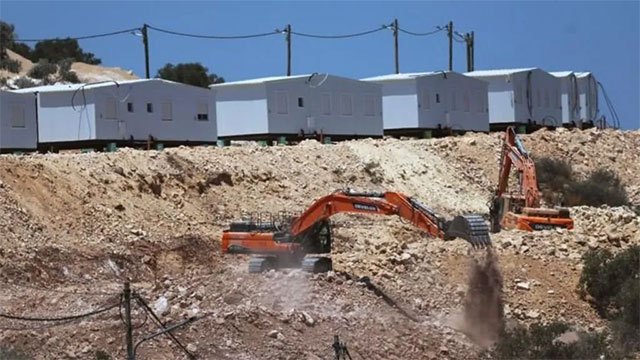
Settlements in the occupied West Bank are illegal under international law. Recent months have seen a rise in violence against Palestinians in the territory by settlers.
The Israeli government has previously warned that it would retaliate if new measures were introduced.
Britain has moved on this ground before as part of a group rather than alone: seven countries jointly condemned Israeli settlement expansion in May. A unilateral trade restriction would go further than that statement.
Not reported
The report is based on briefings rather than a published policy, and the measures had not been announced at the time of writing. It does not say which products would be covered, when restrictions would take effect, how settlement-origin goods would be identified at the border, or whether services restrictions would extend to banking or insurance.
It does not report what form Israeli retaliation might take, and carries no comment from the Israeli government or from any Palestinian representative. No other verified newsroom had reported the plan at the time of writing.
Update, September 8: the sanctions are announced
Miliband made the statement to the House of Commons on Tuesday, the Daily Mirror reported, citing Al Jazeera. Britain will impose an import ban on goods from Israeli settlements, alongside what he described as a comprehensive sanctions regime.
Britain could no longer simply “call out” injustice and suffering but had to “act” to oppose settlement expansion, Miliband told MPs. “Today we refuse to be bystanders to further suffering and to the destruction of the two-state solution,” he said.
He went further than trade. Miliband said Britain’s position is that the occupation of the West Bank is unlawful, and that London believes there is “ethnic cleansing” of Palestinians in parts of the territory.
The practical effect may be limited. Annual bilateral trade between the UK and Israel is worth about £6 billion (US$8.12bn), and the Daily Mirror reported that the impact is likely to be minimal, with no detail yet on how Britain will distinguish goods originating in West Bank settlements from products made in Israel. The announcement covers goods; whether the services restrictions Labour MPs had anticipated are included was not reported.
Israeli and US reaction
Hiru News, reporting before the statement, named the Israeli response. President Isaac Herzog accused Britain of interfering in Israel’s elections, due in late October. Finance Minister Bezalel Smotrich called for the British ambassador in Tel Aviv to be expelled.
The two accounts differ slightly on who objected: the Daily Mirror refers to “two Israeli ministers” calling for measures against Britain, while Hiru names Herzog — the head of state, not a minister — and Smotrich. Both outlets agree the United States, through its ambassador to Israel, had already criticised the plan.
Hiru framed the move as the latest in a series of sanctions against Israel as it faces growing diplomatic isolation. Neither outlet carries comment from a Palestinian representative.