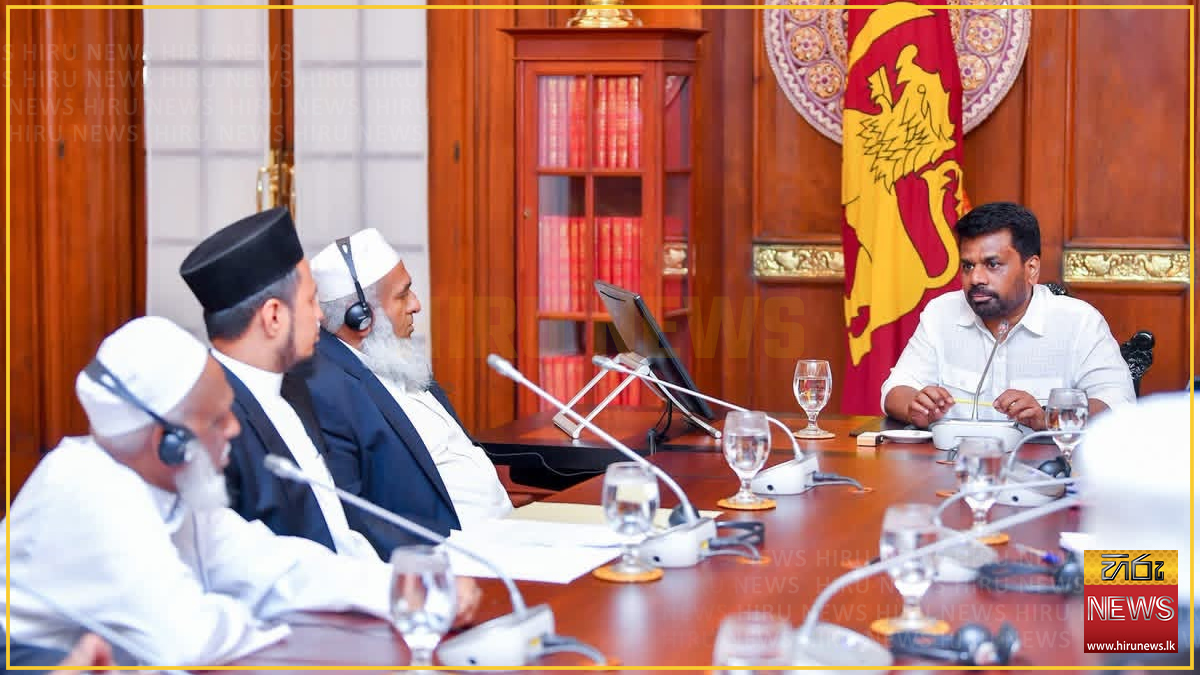
President Anura Kumara Dissanayake held two separate meetings with religious leaders at the Presidential Secretariat on Thursday — one with a Catholic delegation, one with the country’s principal body of Muslim clerics. Both covered communal hatred and the Easter Sunday investigations; only the first dealt with the environment.
The Catholic meeting
The Catholic delegation was led by the Archbishop of Colombo, Malcolm Cardinal Ranjith. The talks centred on measures to prevent environmental damage that could harm people’s lives and livelihoods, the Daily Mirror reported, with what it described as lengthy discussion of how to limit its impact on communities.
The meeting also covered the government’s programme to strengthen coexistence and national unity by preventing racist or religiously motivated hate activity, and the progress of investigations into the Easter Sunday attacks. Infrastructure in areas where Catholic communities live was also raised.
The Catholic leaders commended the government’s efforts to build trust between communities and pledged their full support.
Rev. Fr. Cyril Gamini and Rev. Fr. Julian Patrick attended, along with Deputy Minister of Religious and Cultural Affairs Muneer Mulaffer and the President’s Senior Additional Secretary Roshan Gamage.
The environmental discussion follows a Bishops’ Conference statement issued after its August plenary, in which the bishops raised sand mining on Mannar Island, the X-Press Pearl compensation ruling and reclamation at Muthurajawela alongside a call for an impartial investigation into the Jaffna mass graves. Neither outlet says whether Thursday’s meeting addressed those specific sites.
The Ulama meeting
Separately, the President met representatives of the All Ceylon Jamiyyathul Ulama the same day, Hiru News reported, citing the President’s Media Division.
Dissanayake said ensuring a safe environment and psychological security for every community, free from fear based on cultural identity, remains a primary objective of the government. Preventing a recurrence of ethnic conflict, he said, requires a precise understanding of politically motivated communal agendas — and while citizens in a democracy have every right to question their leaders’ decisions, “no one holds the right to spread hatred among ethnic groups.”
That framing closely tracks his warning this week against hate speech directed at women political leaders, in which he drew the same line between legitimate criticism and incitement.
The discussion turned to campaigns targeting the Muslim community before and after the Easter Sunday attacks. The Ulama representatives said justice must be delivered to the victims and offered their full support in establishing the truth.
A separate Daily Mirror report on the same meeting puts the ACJU’s demand more sharply: the representatives urged that information about those responsible for the attacks be disclosed, saying the victims deserved justice. That report also records the meeting discussing measures against the spread of ethnic and religious hatred specifically on social media — a detail Hiru’s account does not carry.
Also discussed: Islamic religious texts and education, to be addressed through technical means in cooperation with the security forces; fair representation for the Muslim community in national bodies including the Constitutional Council; and administrative matters such as regulations on official uniforms, which the President said would be handled to prevent renewed tension.
What was not stated
Neither outlet reports the two meetings together, and neither says whether they were part of a planned round of engagement with religious leaders or coincidental. Neither gives any detail on what the President told either delegation about the state of the Easter Sunday investigations, and neither records a commitment, timeline or decision arising from either meeting.